
A damp smell or soft spot in your floor may be a warning, but it doesn’t prove there’s a leak beneath your home. A pier and beam plumbing leak can be difficult to pinpoint, and moisture may affect crawl-space soil or wood supports before the source is clear.
It’s understandable to wonder whether you’re dealing with plumbing, foundation movement, or both. These are separate questions: one assessment traces the water source, while another evaluates structural conditions. We’ll explain what to look for, how to document it safely, and when a foundation assessment can help clarify what’s happening.
At Crown Leveling Inc., we assess foundation concerns across Central Texas, where shifting clay soils are part of the local context. Our Pier And Beam Foundation Repair process starts with an inspection and assessment, followed by a repair plan based on the findings. A suspected leak doesn’t automatically mean the foundation is damaged, but noting changes early can help you choose a practical next step.
Key Takeaways
- One damp patch or unusual odor doesn’t prove a pier and beam plumbing leak. Compare water-related clues with any structural changes.
- A raised pier-and-beam home differs from a concrete slab, so the foundation type affects what an assessment should consider.
- Document what you notice from a safe location. Don’t enter a hazardous crawl space or try to open building components to find the source.
- Our process for foundation concerns is Inspection & Assessment, Custom Repair Plan, and Precision Execution when repair is appropriate.
Pier and Beam Plumbing Leak Signs: What Homeowners May Notice
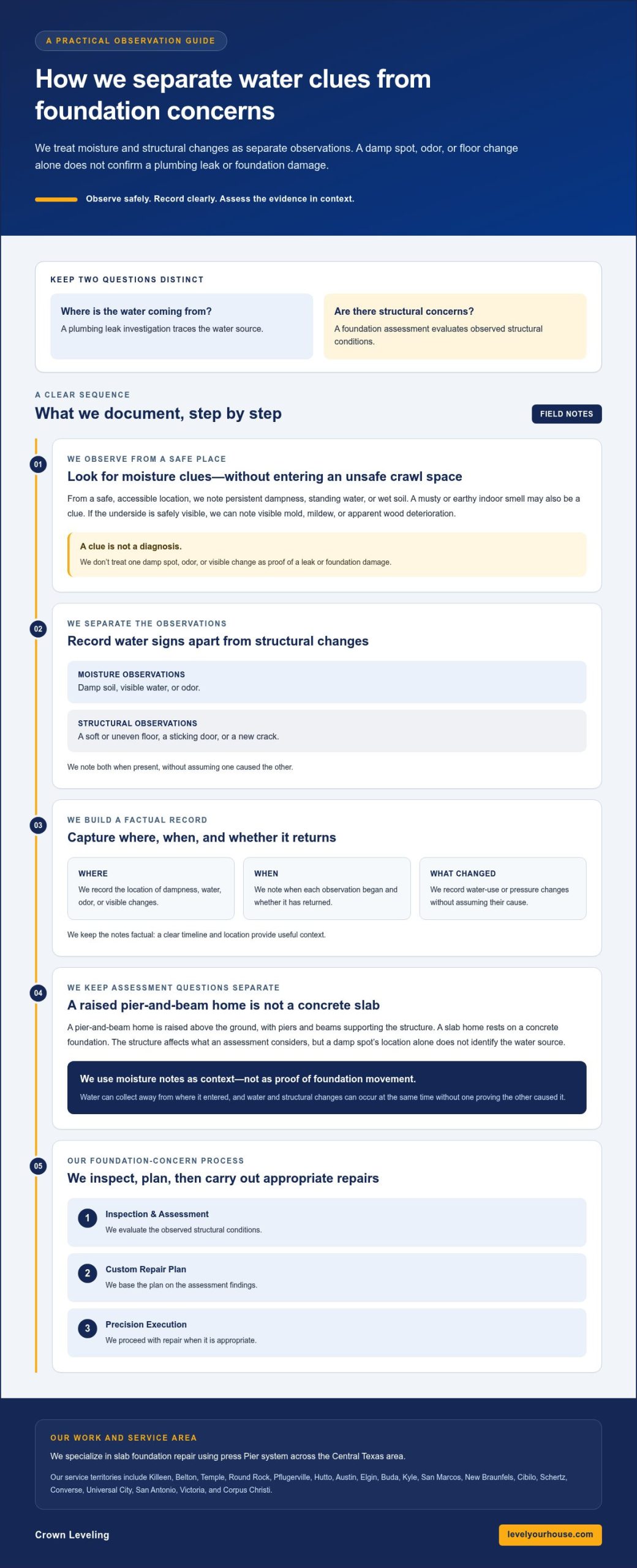
Water beneath a house is concerning, especially when it’s near wood supports or foundation soil. But one damp spot, odor, or indoor change doesn’t confirm a pier and beam plumbing leak. Treat these signs as reasons to observe and document conditions, not as a diagnosis.
Pier-and-beam homes are raised above the ground and supported by piers and beams. Piers are part of a deep foundation system; the Deep Foundation overview explains how deep foundations transfer building loads into the ground. The space below a raised home may make some moisture visible, but only inspect from a safe, accessible location. Don’t crawl beneath the home if access or conditions feel unsafe.
Which observations can point to water beneath the house?
Look for persistent dampness, standing water, or wet soil in an accessible area. A musty or earthy smell indoors may also be a clue. If you can safely see the underside of the home, note visible mold, mildew, or apparent wood deterioration. Soft, spongy, or uneven flooring may warrant attention, but it doesn’t identify the cause.
Changes in water use or pressure are also worth recording. They’re useful details to report, not proof of a leak. Note when each change began, where it occurs, and whether it returns after the area appears dry.
How can a homeowner distinguish a leak clue from a foundation concern?
Record water observations separately from structural changes. Damp soil or visible water is a moisture clue. A door that starts sticking, an uneven floor, or a new crack is a structural observation. Different causes can produce these signs, and they may happen at the same time without one proving the other caused it.
A symptom checklist can help you describe what you’ve noticed, but it can’t determine whether plumbing is leaking or the foundation is moving. Write down the location and timing of each observation so an appropriate assessment has useful context.
Before arranging an assessment, note details such as:
- Where you noticed dampness, water, odor, or visible changes.
- When each symptom started and whether it has returned.
- Any changes in water use or pressure, without assuming the cause.
- Indoor changes, such as soft or uneven floors, sticking doors, or new cracks.
Keep the record factual. A clear timeline and location are more useful than trying to diagnose the problem from a single sign.
How a Plumbing Leak Can Affect a Pier-and-Beam Home
A pier-and-beam home is raised above the ground, with its structure supported by piers and beams rather than resting directly on a concrete slab. The area below the floor is commonly called a crawl space. Water that collects there may reach soil or building materials, creating conditions worth examining. Its presence alone, however, doesn’t establish that the foundation is damaged.
A suspected pier and beam plumbing leak raises two related but separate questions: where the water is coming from, and whether the home’s supports or other structural components show signs of concern. Keeping those questions distinct helps avoid mistaking a wet area for a complete diagnosis.
Where might water appear in a raised-floor structure?
You may notice moisture on the ground beneath the floor, a persistent damp patch, or visible water in an accessible part of the crawl space. Water may also appear near the perimeter or coincide with changes indoors. The spot where moisture appears doesn’t necessarily reveal its source. Water can travel or collect away from where it entered, so a visible wet area is a clue, not a map of the plumbing.
Access conditions matter. Don’t enter a cramped, unstable, or otherwise unsafe area to investigate. From a safe vantage point, note the location and extent of visible water. You can also record changes in soil or nearby materials without assuming they prove structural damage.
Why water and foundation movement should be assessed separately
Water and structural changes can occur at the same time, but one doesn’t automatically establish the other. Across Central Texas, shifting clay soils are part of the local foundation context. Moisture conditions may be relevant during an evaluation, but soil type alone can’t show what’s happening beneath a particular home or explain a specific floor change.
A foundation assessment considers the structure and the conditions observed around it. Moisture near a support may call for closer attention, while a sticking door or uneven floor is a separate observation to document. Neither confirms foundation movement by itself. The goal is to understand the evidence in context before deciding what structural response, if any, is appropriate.
“Leak investigation asks where water is coming from; foundation assessment asks whether the structure shows related concerns.” The questions can inform one another, but they aren’t interchangeable. Notes about both water and structural changes give an assessment a clearer starting point.
At Crown Leveling, we assess pier-and-beam foundation concerns by inspecting the home’s observed structural conditions. If you’ve noticed changes that raise foundation concerns, our foundation assessment can help clarify what the structure may need.
Pier-and-Beam Leak or Slab Leak? Understand the Difference
The first distinction is the structure beneath your home. A pier-and-beam house is raised above the ground, leaving an area below the floor. A slab home sits on a concrete foundation, so plumbing concerns beneath it involve a different access question. A damp spot’s location alone can’t confirm the foundation type or identify the water source.
What makes a pier-and-beam plumbing concern different?
With a raised floor, you may be able to observe conditions beneath the home from a safe, accessible point. That view can provide useful context, but it doesn’t identify the exact plumbing source. A crawl-space observation isn’t an under-slab leak diagnosis because the construction and access questions differ. Keep source identification and structural assessment distinct, even if water and changes in the home appear together.
For a suspected pier and beam plumbing leak, note whether the concern is below the raised floor, indoors, or both. Describe any structural changes separately. This gives an assessment a clearer picture without treating one observation as proof of another.
When does under-slab tunneling belong in the conversation?
Under Slab Tunneling provides access beneath a concrete slab. It isn’t a general crawl-space solution or a repair method for a pier-and-beam home. We provide Under Slab Tunneling for under-slab access, while pier-and-beam foundation concerns are assessed in the context of the raised structure.
Similar symptoms, such as a floor change or visible moisture, don’t make the two construction types interchangeable. A foundation assessment focuses on the structure and observed conditions; identifying a plumbing source is a separate question. Keep the home’s foundation type in mind as you consider next steps.
For more context on access beneath concrete foundations, see our Foundation Tunneling for Plumbing guide. If you’re comparing foundation types, our slab foundation repair guide covers the slab side of the distinction. Neither method should be assumed to apply based on a symptom alone. The home’s construction determines which foundation-related assessment is relevant.
What to Do When You Suspect a Pier-and-Beam Plumbing Leak
A suspected pier and beam plumbing leak calls for measured action, not guesswork. Focus on safety first, then record what you observe. Arrange an assessment for the water concern and, if needed, a separate evaluation of possible structural effects.
- Keep clear of hazards. Don’t touch standing water if it’s near electrical equipment, wiring, or another apparent danger. Stay out of a crawl space if it’s flooded, unstable, cramped, or otherwise unsafe. Don’t put yourself at risk to inspect a suspected leak.
- Use a shutoff only if it’s safe and accessible. If you can reach an appropriate shutoff control without entering a hazardous area or handling wet equipment, you may use it to limit water exposure. Don’t force a stuck control or attempt an unfamiliar repair.
- Observe from a safe location. Note where you see water or dampness, whether it appears to be spreading, and any changes inside the home. Don’t move materials, dig, or open building components to search for the source.
- Document the timeline and conditions. Record when you first noticed the issue and whether it returns. Photograph visible moisture and indoor changes from a safe, accessible position. Keep the original photos so you can compare conditions over time.
- Arrange appropriate assessment. A plumbing concern needs an evaluation focused on identifying the water source, which can be handled by professional plumbing and maintenance specialists like Synergy Trades Group. If you’ve also noticed changes to floors, doors, or other structural conditions, arrange a foundation assessment as well. One evaluation doesn’t automatically answer the other question.
What information helps an assessment?
Be specific and factual. “Water beneath the back room appeared after rain” is more useful than assuming a pipe is leaking. Note the location, when the water appeared, whether it recurred, and any changes in water use or pressure. List indoor observations separately, such as a new floor slope or a door that has started sticking. These details explain what you’ve seen without turning your observations into a diagnosis.
Keep your notes even if the area later looks dry. A brief record of when conditions changed can provide useful context. Don’t perform invasive checks or crawl beneath the home to gather more evidence. Your safety comes first, and a visible symptom alone can’t establish the water source or confirm foundation movement.
At Crown Leveling, we assess foundation concerns through a clear process: Inspection & Assessment, a Custom Repair Plan, and Precision Execution when structural repair is appropriate. Our free on-site inspection focuses on foundation conditions, not on confirming the plumbing source. If you’re seeing possible structural changes, schedule a foundation inspection with our team so we can assess the foundation conditions.
How Crown Leveling Assesses Pier-and-Beam Foundation Concerns
A suspected leak can raise questions beyond the water source. If you’ve also noticed changes in your home, a foundation assessment can help clarify whether the structure shows concerns that need attention. At Crown Leveling, our process follows three stages: Inspection & Assessment, Custom Repair Plan, and Precision Execution. Our free on-site inspection focuses on foundation conditions, not on diagnosing a plumbing leak.
What happens during inspection and assessment?
We review the foundation concerns you’ve noticed and assess the observed conditions. Your notes and photographs can help explain when changes appeared and where you saw them. We discuss our findings clearly, so you can understand which observations relate to the foundation and which questions remain separate. Clear assessments and project updates help you follow the next steps without assuming a plumbing cause.
How does a custom repair plan guide next steps?
If the assessment identifies foundation concerns that call for repair, we develop a Custom Repair Plan based on those findings. Precision Execution is the final stage of our process. The appropriate work depends on the conditions assessed, not simply on the presence of water or a single symptom.
For pier-and-beam homes, Pier And Beam Foundation Repair is relevant when the assessment identifies foundation needs suited to that work. It doesn’t identify or repair the plumbing source. Keeping those roles clear helps you understand what our foundation evaluation addresses and avoids treating a suspected leak as automatic proof that foundation repairs are needed.
Our process moves in order:
- Inspection & Assessment: We examine observed foundation concerns and discuss the conditions found.
- Custom Repair Plan: When foundation work is appropriate, we outline a repair approach based on the assessment.
- Precision Execution: We carry out the planned foundation work as the final step in the process.
House leveling concerns can involve more than one visible symptom, so the assessment should guide the response. We share clear findings, timelines, and project updates to help you understand the work being considered and how the project proceeds. A foundation inspection can help distinguish structural concerns from unanswered plumbing questions, but it isn’t a plumbing diagnosis.
If you’re concerned about changes to your pier-and-beam foundation, schedule your free inspection with Crown Leveling. We’ll assess the foundation conditions and explain the next steps based on what we find.
Take the Next Step Toward Clarity
You don’t have to determine the cause of a pier and beam plumbing leak on your own. Keep your observations handy and use the right assessment to clarify whether the home’s foundation needs attention. Separating water concerns from structural findings helps you make decisions based on what’s observed rather than assumptions.
At Crown Leveling, we bring local knowledge of Central Texas conditions, including shifting clay soils, to foundation assessments. We’ll explain our findings and outline a Custom Repair Plan if foundation work is appropriate. Our service area includes Travis, Bexar, Comal, Hays, Bell, Nueces, Williamson, and Victoria counties in Texas.
Schedule your free inspection with Crown Leveling to have us assess foundation concerns at your property. We’ll explain the next steps based on what we find.
Frequently Asked Questions
Can a plumbing leak cause foundation problems in a pier-and-beam house?
A plumbing leak can contribute to conditions that warrant foundation attention, but it doesn’t automatically mean the foundation is damaged. A wet patch is evidence of moisture, not proof that supports have shifted. Record whether changes, such as a door rubbing its frame or a floor feeling different, appeared around the same time. An assessment helps separate what you’ve observed from what still needs evaluation.
How do I know if water beneath my pier-and-beam house is from a plumbing leak?
Visible water alone can’t tell you whether a pipe is leaking; another source may need consideration. For a suspected pier and beam plumbing leak, note the exact spot, when the water appeared, and whether it returns after the area dries. Record changes in water use as observations, not proof. Don’t lift flooring, dig, or enter an unsafe crawl space to trace the source. Plumbing and structural concerns require separate assessments.
Is it safe to enter a crawl space after a plumbing leak?
Don’t enter if there’s standing water, an electrical concern, unstable access, or another apparent hazard. Wet areas near electrical equipment can pose a serious risk, so keep your distance and avoid touching wet equipment. Even if conditions appear safe, you can observe from the entrance rather than crawl inside. A photo taken from a safe location may help document what you see without requiring a closer inspection.
Can a pier-and-beam plumbing leak be repaired with under-slab tunneling?
No. Under Slab Tunneling is our service for access beneath a concrete slab, not a pier-and-beam repair method. Pier-and-beam homes are raised above the ground, so the construction type changes what foundation assessment is relevant. First identify whether your home has a raised foundation or a slab, then keep the plumbing-source question distinct from any structural concern. A symptom alone doesn’t determine the appropriate method.
Will damp soil beneath a pier-and-beam home always mean the foundation is damaged?
No. Damp soil alone can’t confirm foundation damage or establish where water came from. Note whether the damp area is isolated or widespread, whether it changes over time, and whether you’ve noticed separate changes in the home, such as a new floor slope. These observations provide context, but they aren’t a diagnosis. An assessment should consider the structure and observed conditions together before drawing conclusions.
Does Crown Leveling offer a free inspection for foundation concerns?
Yes. We offer a free on-site inspection to assess foundation concerns, including in Central Texas, where shifting clay soils are part of the local context. Our process is Inspection & Assessment, Custom Repair Plan, then Precision Execution when foundation work is appropriate. The inspection focuses on foundation conditions and planning; it isn’t a promise to identify a plumbing leak or repair a pipe.