
Did you know that nearly 20% of all homes in Texas have undergone some form of foundation repair? While many homeowners blame the heat, a hidden foundation leak is often the silent culprit behind those sudden wall cracks and skyrocketing water bills. If you’ve noticed your doors sticking or heard water running when the taps are off, you aren’t just imagining things. It’s a stressful situation that can make any homeowner fear for their property’s structural integrity.
We understand that the thought of a sinking home is overwhelming. That’s why we’ve put together this guide to help you identify the warning signs and find the most effective Texas-specific repair methods to protect your investment. You’ll learn how to distinguish between plumbing issues and groundwater shifts, and why specialized techniques like foundation tunneling are the cleaner, less disruptive alternative to breaking through your home’s flooring. We’ll also walk through the repair process so you can find a local expert who understands our state’s unique expansive clay soil without feeling like you’re breaking the bank.
Key Takeaways
- Learn to distinguish between plumbing-related slab leaks and groundwater issues by monitoring utility bills and checking for floor “hot spots.”
- Understand how a foundation leak creates hidden voids and triggers soil swelling that can lead to expensive structural settlement.
- Compare repair options to see why foundation tunneling is the preferred, mess-free method for accessing under-slab plumbing.
- Discover proactive steps to stabilize your slab, including the use of root barriers and consistent moisture management for Texas clay soils.
What is a Foundation Leak in a Texas Slab-on-Grade Home?
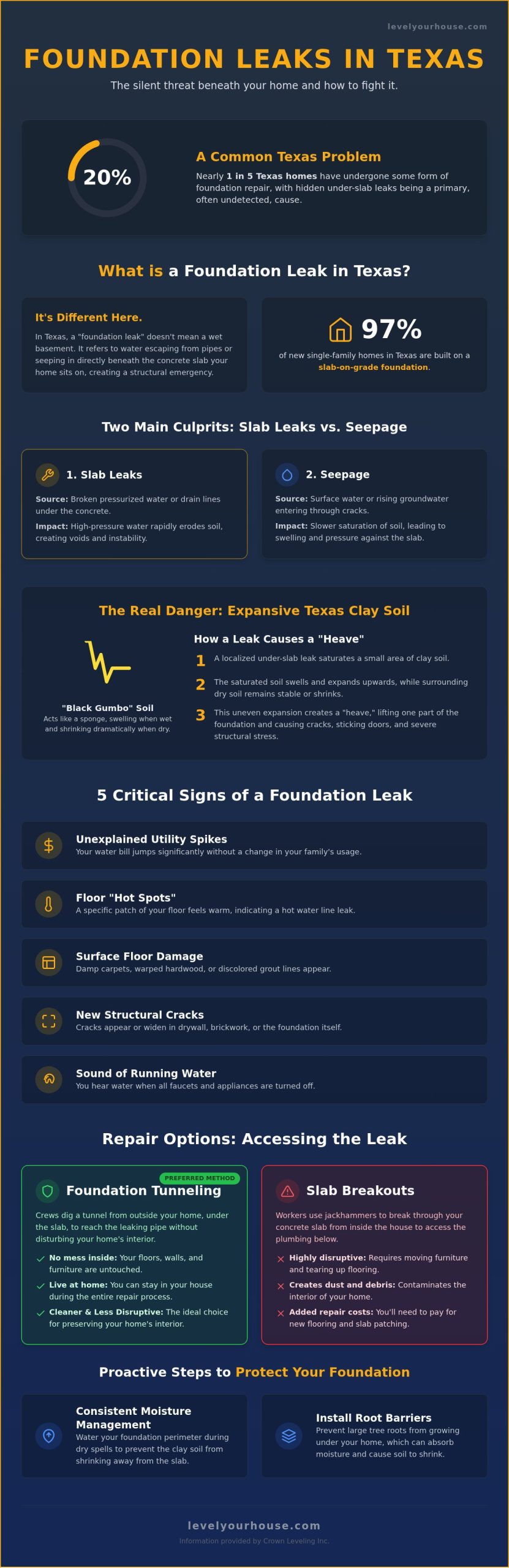
In many parts of the country, a foundation leak involves water seeping through basement walls. In Texas, the situation is different. Because nearly 97% of new single-family homes in the state are built using slab-on-grade construction, a foundation leak typically refers to water infiltrating or escaping directly beneath the concrete slab. This isn’t just a minor plumbing nuisance; it’s a high-priority structural emergency. When water collects where it shouldn’t, it compromises the very ground your home sits on, which is why emergency restoration from CRS San Antonio is often necessary to address the resulting water damage immediately.
A Foundation (engineering) is designed to transfer the weight of a structure safely to the earth. In cities like Austin and San Antonio, these foundations rest directly on highly active soil. When a leak occurs, it disrupts the delicate balance between the concrete and the ground. If you don’t address the source of the water immediately, you risk permanent structural damage that can cost tens of thousands of dollars to remediate.
Slab Leaks vs. Foundation Seepage
Understanding the source of the water is the first step for any homeowner. We generally categorize these issues into two types:
- Slab Leaks: these occur when pressurized fresh water lines or drain pipes buried within or under the concrete fail. Because the water is often under pressure, it can quickly erode the soil beneath your home.
- Seepage: this happens when surface water or rising groundwater enters through existing cracks in the foundation or through the porous concrete itself.
Identifying the source is critical because the repair for a broken sewer line is vastly different from the drainage work needed to divert groundwater. Professional leak detection should always happen before structural repairs begin to ensure you’re solving the right problem.
The Role of Texas Clay Soil in Foundation Leaks
The primary reason a foundation leak is so dangerous in Central and South Texas is our “black gumbo” expansive clay soil. This soil acts like a sponge, swelling significantly when wet and shrinking when dry. When a leak introduces localized moisture, it causes the clay to expand in one specific area while the rest of the home remains stable. This creates a “heave” effect, where the soil actually lifts the foundation unevenly, leading to wall cracks and shifted door frames.
Hydrostatic pressure is the force exerted by standing water against the concrete slab, which can eventually push moisture through microscopic pores or existing structural cracks. In the I-35 corridor and along the Gulf Coast, this pressure is often exacerbated by heavy rain events that follow long periods of drought, putting immense stress on the slab’s integrity.
5 Critical Signs You Have a Foundation Leak
Detecting a foundation leak early can save you from catastrophic structural failure. Unlike basement homes where water pooling is obvious, Texas slab homes often hide the evidence until the damage is extensive. If you suspect your home’s integrity is at risk, look for these five red flags.
- Unexplained Utility Spikes: if your monthly water bill jumps significantly without a change in usage, a pipe under your slab likely has a pinhole leak or a major break.
- Floor Hot Spots: walk barefoot across your tile or laminate. If you feel a warm patch in a specific area, it usually indicates a hot water line is leaking directly beneath the floor.
- Surface Floor Damage: keep an eye out for damp carpets, warped hardwood planks, or discolored grout lines. These are signs that moisture is wicking up through the concrete.
- Structural Cracks: new or rapidly widening cracks in your exterior brickwork, interior drywall, or the foundation itself suggest the soil is shifting due to excess water.
- Ghostly Running Water: turn off every faucet and appliance. If you still hear the faint sound of rushing water behind walls or under the floor, you have an active leak.
Visual and Auditory Detection Tips
You can perform a simple DIY test using your water meter. Ensure all water is off, then check the meter’s leak indicator or record the reading and wait two hours. If the number changes, you have a leak. Also, look for “efflorescence.” This is a white, powdery salt deposit left behind on concrete or brick after water evaporates. Even if you don’t see water, a musty odor in a home without a basement is a strong indicator of trapped moisture under the slab.
When to Call a Professional Leak Detector
Not every leak is visible. “Ghost leaks” are particularly dangerous because they don’t always show surface water, yet they silently erode the soil supporting your home. This erosion creates voids that lead to the signs of foundation issues most homeowners dread, such as sinking corners or uneven floors. Because these problems involve both plumbing and structural stability, it’s vital to have experts collaborate on a solution.
If you’re noticing these warning signs, a professional inspection is the only way to confirm the source. You might consider reaching out for professional leak detection to ensure you’re addressing the root cause before the clay soil begins to heave or sink. Catching the problem now prevents a plumbing nuisance from becoming a total structural overhaul.
Why Foundation Leaks are Dangerous for Texas Structures
A foundation leak does more than waste water; it actively dismantles the ground beneath your home. In Texas, where our soil is notorious for its volatility, any introduction of unmanaged water is a direct threat to structural stability. While a dripping faucet in a sink is a nuisance, a dripping pipe under your slab is a mechanical force that can shift thousands of pounds of concrete. If left unaddressed, the consequences move quickly from cosmetic cracks to severe structural failure.
The primary danger lies in how water interacts with our “black gumbo” expansive clay. When a leak occurs, it doesn’t just sit there. It causes localized swelling in one specific area of the foundation while the rest of the slab remains on relatively dry soil. This creates differential settlement, a condition where the house is being pushed up in one spot and sinking in another. The resulting tension is what snaps floor tiles, cracks exterior brick, and causes ceilings to separate from walls.
Beyond the concrete, moisture wicking through the slab creates a breeding ground for mold within wall cavities and HVAC systems. Because Texas homes often run air conditioning year-round, dampness under the floor can be pulled into the ductwork, spreading spores throughout the living space. This hidden dampness also attracts termites and other pests that thrive in the dark, moist environments created by a long-term foundation leak.
When moisture issues lead to environmental concerns like mold or water damage, you can visit Hays + Sons Complete Restoration for expert mitigation and professional restoration services.
Erosion and Voids: The Silent Foundation Killers
Water under pressure acts like a hydraulic drill. Over time, even a small pinhole leak can move cubic yards of soil, carving out empty spaces known as voids. When these voids become large enough, the concrete slab loses its support and begins to sag into the hole. This is why you might notice a “sinking” corner of your home or a sudden slope in your kitchen floor. In coastal cities like Corpus Christi, the risk is even higher. The sandy soil found near the Gulf Coast erodes much faster than the heavy clays of Central Texas, meaning a leak can cause significant structural shifts in a matter of weeks rather than months.
The Domino Effect on Home Systems
Structural movement rarely stays isolated. As the house shifts, it puts immense stress on other systems. You’ll first notice windows and doors that stick or refuse to latch properly. However, the more serious risk is secondary plumbing failure. As the slab moves, it pulls on other pipes, potentially causing new breaks in gas or sewer lines. Ignoring a leak today almost always leads to a more expensive house leveling project later. Addressing the water source immediately is the only way to stop this destructive cycle and protect your property’s resale value.
Repair Options: Foundation Tunneling vs. Slab Breakouts
Once a professional confirms a foundation leak, you face a critical decision regarding how to access the damage. Historically, the standard approach was a slab breakout. This involves a plumber using a jackhammer to bust through your home’s interior flooring to reach the pipe. It’s a destructive process that creates clouds of concrete dust, ruins expensive finishes, and often forces families to vacate their homes for days. For most Texas homeowners, there is a much better way.
Choosing the right repair method depends on the location of the leak and the extent of the soil damage. While breaking through the slab might seem faster to some, the long-term costs of replacing custom flooring and deep-cleaning a dust-filled home usually outweigh any initial convenience. Modern solutions prioritize keeping the mess outside the home while ensuring the structural base is fully restored.
The Benefits of Foundation Tunneling
Foundation tunneling has become the preferred method for under-slab plumbing repair across cities like Austin and San Antonio. Instead of coming from above, technicians dig horizontal access shafts beneath your concrete slab. This approach allows you to stay in your home throughout the entire repair process. You don’t have to pack up your kitchen or worry about silica dust settling in your HVAC system. More importantly, it preserves your interior. If you have custom tile or rare hardwood, foundation tunneling for plumbing is the only way to ensure your home’s aesthetic remains untouched while the structural work happens out of sight.
Stabilizing the Slab Post-Leak
Fixing the broken pipe resolves the source of the water, but it doesn’t fix the damage left behind in the soil. As water escapes, it carves out large voids that leave your slab suspended in mid-air. If you backfill a tunnel without addressing these empty spaces, the slab remains unsupported and prone to sinking. This is where polyurethane foam foundation repair becomes essential. We use high-density foam to fill those water-created voids, providing a stable base for the concrete.
You should never attempt to level the house until the leak is 100% resolved and the soil is stabilized. Rushing into structural leveling while the ground is still saturated or riddled with voids can lead to further cracking. If you suspect a pipe has failed under your home, don’t wait for the floors to start sinking. Contact our team today for specialized foundation tunneling services to protect your home without the mess of a slab breakout.
Protecting Your Texas Foundation: Prevention and Next Steps
Maintaining a healthy foundation in Texas requires a proactive strategy rather than a reactive one. While you can’t control the expansive clay soil, you can control the environment around your home to prevent a future foundation leak or structural shift. The primary goal is to keep soil moisture levels consistent throughout the year. During our intense summer dry spells, using a soaker hose around the perimeter helps prevent the clay from shrinking and pulling away from the concrete, which often creates the gaps where water eventually pools.
Large trees are another hidden threat to your home’s stability. Their expansive root systems can stretch far beneath your slab, sucking out moisture and causing the soil to collapse in localized areas. This is why we recommend reviewing a root barrier installation guide to understand how to block these roots without harming your landscaping. When combined with proper grading that ensures rainwater flows at least six feet away from your house, these steps create a protective buffer that keeps your slab secure.
The Importance of Perimeter Drainage
Effective drainage is your first line of defense against groundwater seepage. In clay-heavy areas like Austin and San Antonio, water that pools near the foundation exerts massive hydrostatic pressure. French drains or surface drains are essential for moving this water away before it can find a path under your slab. You should also ensure your gutters are clear and that downspouts utilize extensions to prevent “ponding” directly against the concrete. If water is allowed to sit, it eventually finds the path of least resistance, which usually leads straight to your foundation’s edge.
Schedule a Professional Foundation Evaluation
If you live in an older home along the I-35 corridor or near the Gulf Coast, regular plumbing inspections are just as important as roofing checks. A slow sewer leak can exist for years before showing outward signs. When you schedule an inspection with Level Your House, we perform a comprehensive assessment of your slab’s levelness and look for early indicators of distress that the untrained eye might miss.
Early detection of a foundation leak saves thousands in structural repair costs and prevents the need for major house leveling later. We understand the specific municipal codes for cities like San Antonio and Austin, ensuring your drainage or tunneling project meets all local requirements. Don’t wait for your doors to stick or your floors to crack. Contact Level Your House today for an expert assessment in Central or South Texas to ensure your home stays on solid ground for years to come.
Secure Your Home’s Structural Integrity Today
Protecting your property from the volatile nature of Texas clay soil starts with awareness and timely action. Identifying a foundation leak early is the most effective way to prevent the destructive cycles of soil expansion and erosion that lead to costly structural failure. By choosing specialized methods like foundation tunneling, you can resolve under-slab plumbing issues without the dust and disruption of traditional slab breakouts. Consistent moisture management and proper perimeter drainage remain your best defenses for long-term stability.
Level Your House specializes in Texas slab-on-grade foundations, providing expert foundation tunneling that keeps the mess outside your home. We’ve been serving Austin, San Antonio, and the surrounding regions since 2026 with a focus on professional, helpful service. Don’t wait for cracks to widen or floors to sink. Schedule your professional foundation leak inspection with Level Your House today. Taking the right steps now ensures your home stays on solid ground for the future.
Frequently Asked Questions
How much does it cost to fix a foundation leak in Texas?
The total cost depends on whether you are paying for the plumbing repair, the structural restoration, or both. Industry data for 2026 suggests that typical foundation repairs in Texas range between $3,000 and $8,000, though major structural overhauls can exceed $25,000. Factors such as the depth of the pipes and the amount of soil stabilization required will influence your final investment. It’s best to get a professional evaluation to understand the specific needs of your property.
Is a foundation leak covered by homeowners insurance?
Coverage usually depends on the source of the water and your specific policy endorsements. Many standard Texas policies cover the “access” or “tear out” costs required to reach a plumbing leak under the slab, but they might not cover the actual pipe repair or the resulting foundation movement. You should check your policy for specific “Seepage and Leakage” or “Foundation” riders, as these are often sold as separate add-ons in the Lone Star State.
How long can I wait to fix a leak under my foundation?
You shouldn’t wait more than a few days to address a suspected leak. Because Texas is home to highly expansive “black gumbo” clay, even a small amount of water can cause the soil to swell and lift your home unevenly. Delaying a repair often turns a manageable plumbing issue into a major structural crisis that requires extensive house leveling and wall repairs.
Can a plumbing leak cause my foundation to crack?
Yes, a plumbing leak is a primary cause of structural cracking in slab-on-grade homes. When water saturates the clay beneath one section of the house, it creates upward pressure called “heave.” This force is strong enough to snap a concrete slab and create the diagonal cracks you see in your exterior brickwork or interior drywall.
What is the difference between a slab leak and a foundation leak?
While people often use these terms interchangeably, a slab leak refers specifically to a broken water or sewer line underneath the concrete. A foundation leak is a broader category that includes plumbing breaks as well as groundwater or surface moisture seeping through the concrete’s pores and existing cracks. Both issues require immediate professional attention to prevent soil erosion and structural shifting.
Will my house sink if there is a leak under the slab?
A house can sink if the leaking water washes away the supporting soil, a process known as void creation. As water moves through the earth, it carries sediment away, leaving the concrete slab suspended over an empty hole. Without the soil to support the weight of the structure, the foundation will eventually sag or “drop” into the void, causing uneven floors and sticking doors.
How do professionals find a leak under a concrete slab?
Specialists use non-invasive technology like electronic acoustic listeners, infrared cameras, and tracer gases to locate the exact source of the water. They may also perform a static pressure test to confirm if the leak is in the supply lines or the wastewater system. This precision allows repair teams to target the specific area without unnecessary digging or damage to your home.
Does foundation tunneling weaken the structure of my home?
Professional foundation tunneling doesn’t weaken your home when it’s performed by experts who understand load-bearing requirements. Tunnels are typically dug to a specific width and depth to allow plumbing access while leaving the majority of the slab’s support intact. After the repair, the area is backfilled and stabilized to ensure the foundation remains as strong as it was before the project began.