
In Kyle’s expansive clay, an under slab plumbing leak is a foundation emergency in disguise. If you are struggling with under slab plumbing kyle tx issues, you’ve likely noticed high water bills or new cracks appearing in your drywall. It’s natural to worry that a repair means destroying your expensive flooring, but modern technology allows for much cleaner solutions than traditional slab cutting.
You deserve a home that stays level and dry without the stress of invasive construction. This guide will show you how to confirm a leak for as little as $150 and explain why non-invasive methods like tunneling or pipe bursting are often better for Texas foundations. We’ll also break down the costs for spot repairs versus full repiping and explain how the 2021 International Plumbing Code affects your upcoming project.
Key Takeaways
- Understand how Kyle’s unique Blackland Prairie clay soil puts immense pressure on your foundation and pipes through seasonal expansion and contraction.
- Master a simple water meter protocol to quickly determine if you have an active leak in your under slab plumbing kyle tx system before calling a professional.
- Learn why delaying repairs leads to “foundation heave,” a costly cycle where water saturation causes your home’s structure to shift and crack.
- Discover why exterior tunneling has become the preferred repair method for Texas homes by preserving your interior flooring and structural integrity.
- Find out why it is critical to let soil moisture stabilize after a plumbing repair before you attempt to level or restore your home’s foundation.
The Science of Under Slab Plumbing in Kyle, TX: Why Leaks Happen
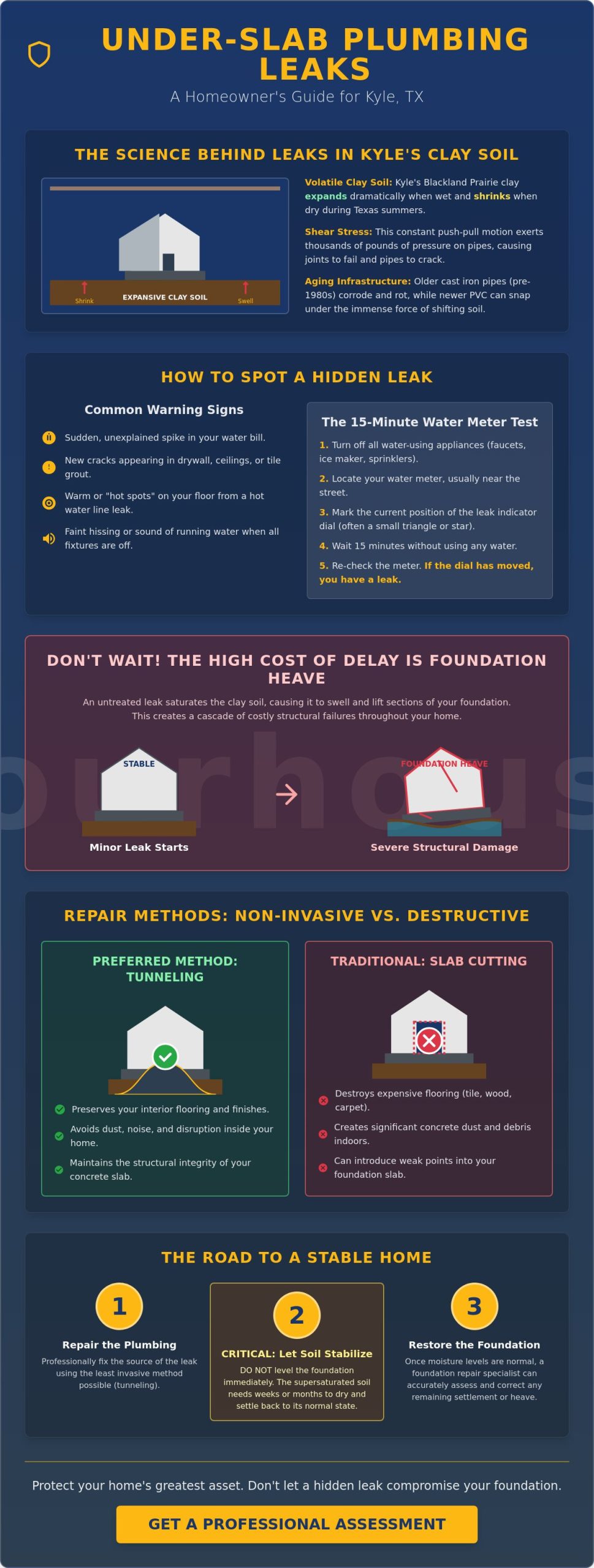
Under slab plumbing refers to the complex network of water supply and waste lines installed directly beneath your home’s concrete foundation. For residents dealing with under slab plumbing kyle tx issues, the problem usually starts deep in the earth. Most homes in this region sit atop the Blackland Prairie, a geological belt famous for its high-plasticity clay. This soil is volatile. It doesn’t just sit still; it reacts aggressively to moisture changes, creating a hostile environment for rigid pipes.
Understanding The Science of Under Slab Plumbing helps clarify why these systems fail so frequently in Central Texas. Seasonal shifts create a phenomenon known as shear stress. As the clay beneath a home dries out during a typical Texas summer, it shrinks and pulls away from the plumbing joints. When the next heavy rain hits, the soil swells rapidly. This cycle places an incredible amount of torque on the connections where your pipes exit the slab or enter the main sewer line. Eventually, the material can no longer withstand the pressure and cracks.
The age of your home also dictates the type of failure you might experience. Homes near the downtown Kyle historic district often feature cast iron pipes, which have a typical lifespan of 50 years. These lines eventually suffer from internal corrosion and “channeling,” where the bottom of the pipe completely rots away. In contrast, newer developments built after the 1980s utilize PVC. While PVC is more flexible, it remains vulnerable to the sheer force of shifting earth and poor installation practices.
Kyle’s Expansive Clay: A Plumbing Nightmare
Clay soil in Hays County can exert thousands of pounds of pressure per square foot when it becomes saturated. This “push-pull” effect acts like a slow-motion earthquake beneath your living room. When the soil expands, it lifts the pipes; when it dries, the pipes lose their support and sag. Hydrostatic pressure is the physical force exerted by stagnant water against the exterior of your plumbing lines or foundation slab. This pressure can force water through the smallest hairline fractures, turning a minor pinhole into a major foundation threat.
Common Causes of Pipe Failure in Hays County
Several localized factors contribute to plumbing failure beyond just the soil type. Many neighborhoods in Kyle were built during periods of rapid expansion, where soil compaction wasn’t always handled with precision. This leads to “voids” under the slab where pipes can hang unsupported. Other common issues include:
- Thirsty Tree Roots: Local species like Live Oaks have aggressive root systems that seek out the moisture leaking from tiny pipe joints.
- Poor Compaction: Settling earth in newer subdivisions can snap rigid PVC connections.
- Electrolysis: A chemical reaction that occurs in older metal pipes, leading to rapid wall thinning and leaks.
How to Detect a Slab Leak: A Step-by-Step Kyle Homeowner Guide
Many homeowners wait for a “hot spot” on their kitchen tile before they start worrying about their pipes. This is a mistake. By the time you feel heat through the floor, a hot water line has likely been leaking long enough to saturate several inches of concrete and the soil beneath it. Proactive detection is the only way to manage under slab plumbing kyle tx issues before they compromise your home’s structural integrity. Start by conducting a “quiet house” test. Turn off the television, the dishwasher, and the HVAC system. Walk through each room and listen for a faint hissing or the sound of rushing water coming from beneath the floorboards.
Visual clues are just as telling. Walk the exterior perimeter of your home and look for unusually green patches of grass or pooling water near the foundation, especially during dry spells. Inside, check for baseboards that are pulling away from the wall or new cracks in your tile grout. These signs often point to a foundation-plumbing connection that is under extreme stress due to localized soil swelling.
The 15-Minute Water Meter Test
The most reliable way to confirm a supply-side leak in 2026 is the meter test. Follow these four steps to get a clear answer:
- Step 1: Turn off every water-using appliance in your home. This includes the ice maker, the irrigation system, and all faucets.
- Step 2: Locate your water meter. In Kyle, these are typically found in the parkway near the street under a heavy metal or plastic lid.
- Step 3: Record the current reading. Most modern digital meters will also show a small “leak indicator” icon or a flow rate. Wait 15 to 30 minutes without using any water.
- Step 4: Check the meter again. If the numbers have changed or the flow indicator is moving, you have a pressurized leak somewhere in your system.
Physical Warning Signs in Your Home
If the meter test is inconclusive, you might have a leak on the “drain side” of your plumbing, which only leaks when water is used. Look for unexplained warm spots on the floor, which indicate a hot water line failure. Damp spots or discoloration on your flooring, particularly near bathrooms or the kitchen island, are major red flags. You might also notice a persistent musty smell that doesn’t go away with cleaning. This odor often means water is wicking up into the wooden studs of your walls. If you notice these symptoms, it is wise to schedule a professional inspection to pinpoint the source before the damage spreads.
The Foundation-Plumbing Connection: Risks of Delayed Repair
A leaking pipe is rarely just a plumbing problem; in Central Texas, it is a foundation crisis in the making. When you ignore issues with under slab plumbing kyle tx, you aren’t just wasting water. You are actively pumping a lubricant into highly reactive clay soil. This creates what engineers call a “cycle of destruction.” The water from the leak causes the soil to expand, which lifts the concrete slab. As the slab moves, it puts even more stress on the remaining rigid pipe connections, often snapping them and creating secondary leaks. Without intervention, this loop continues until the structural integrity of your home is compromised.
The financial consequences of waiting are steep. A typical spot repair for a single leak might cost between $1,500 and $4,500 in 2026. However, if that leak is allowed to destabilize the foundation, you could be looking at a total restoration bill exceeding $20,000. Professionals follow strict industry standards for under-slab plumbing to ensure pipes are buried at depths that minimize these risks, but even the best installation can’t withstand years of soil saturation. If your doors are sticking in their frames or your windows suddenly won’t budge, the foundation has already begun to react to a plumbing failure. Before committing to any repair approach, reviewing a detailed breakdown of slab leak repair cost in Texas can help you budget accurately and avoid unexpected expenses.
Foundation Heave vs. Settlement
It is vital to distinguish between heave and settlement. Heave is the upward movement of the foundation caused by the rapid expansion of clay soil as it absorbs water from a leak. Settlement, conversely, usually happens during the hot Kyle summers when the soil dries out and pulls away. Because a slab leak provides a constant source of moisture, it often triggers localized heave that can tilt your entire floor plan. For a deeper look at managing these structural shifts, consult our guide on Slab Foundation Repair: The Complete Texas Homeowner Guide for 2026.
Health Risks: Mold and Mildew Growth
Beyond structural damage, delayed repairs pose a significant threat to your family’s health. Water trapped between the soil and the concrete slab creates a dark, humid environment where mold and mildew thrive. These spores don’t stay under the house; they can migrate through foundation cracks and into your living space. This degrades indoor air quality and can trigger chronic respiratory issues or allergies. Addressing under slab plumbing kyle tx leaks quickly is the only way to keep your home’s environment dry and safe for long-term habitation.
Repairing Under Slab Plumbing: Tunneling vs. Trenching
Choosing a repair method for under slab plumbing kyle tx depends on your budget, the leak’s location, and how much disruption you can tolerate. Traditionally, plumbers used trenching, which involves cutting through your home’s interior slab. Today, many Texas homeowners prefer tunneling. This method accesses the pipes from the outside, keeping your living room free of dust and debris. Both approaches have their place, but the decision significantly impacts your total restoration costs and daily life.
A professional repair doesn’t end when the pipe is fixed. Every project should conclude with a hydrostatic pressure test. This process involves plugging the plumbing system and filling it with water to a specific level to ensure the new connections hold firm. It’s the only way to verify that the system is fully sealed before the earth is replaced. When evaluating a contractor, ask specifically about their experience with Kyle’s clay soil. You need a team that understands how to support the slab during a dig to prevent the foundation from sagging further during the repair process.
The Tunneling Advantage
Tunneling has become the gold standard because it protects your home’s interior. Crews dig a path underneath the foundation from the exterior perimeter, allowing them to reach the leak without disturbing your flooring. This is particularly valuable if you have high-end hardwood or custom tile that is difficult to match or replace. Residents don’t have to move out or even shift their furniture. You can continue your daily routine while the work happens several feet below your floorboards. While the cost for a spot repair typically ranges from $1,500 to $4,500, tunneling avoids the additional thousands of dollars often spent on interior floor restoration. For a complete breakdown of how this process works and what it costs in 2026, our guide on foundation tunneling for plumbing covers the engineering standards, code requirements, and per-linear-foot pricing you need to know before hiring a contractor.
When Trenching is Necessary
Despite the benefits of tunneling, trenching remains a common option for isolated leaks located near the center of a large home where a tunnel would be too long to be safely excavated. It involves using jackhammers to break through the concrete slab from inside the house. The disruption factor is high; the process creates significant dust and noise, making it difficult to stay in the home. If you are considering this route, factor in the cost of replacing your flooring and the potential for “dust creep” into your HVAC system. If you aren’t sure which method is right for your property, you should request a professional repair evaluation to compare the long-term structural impact of each choice.
In some cases, if the pipes are severely deteriorated, a plumber might suggest rerouting. This involves abandoning the old lines under the slab and running new ones through the walls or attic. This method usually costs between $2,000 and $7,000 and completely removes the risk of future leaks in that specific section of under slab plumbing kyle tx.
Next Steps: Coordinating Plumbing and Foundation Restoration
Once the plumber packs up and the water stops flowing under your home, you might think the crisis is over. It isn’t. Fixing a leak in your under slab plumbing kyle tx system resolves the source of the moisture, but it doesn’t fix the damage the water already caused to the soil. This is the “Fixed Pipe, Unstable House” dilemma. The clay beneath your slab has likely expanded significantly, and as it dries, it will shrink. This movement can lead to secondary foundation settlement that appears weeks or even months after the plumbing repair is complete.
Patience is critical during this phase. You must wait for the soil moisture levels to stabilize before attempting any foundation leveling. If you rush to lift the house while the soil is still saturated, the foundation will likely shift again as the ground returns to its natural state. In Kyle’s high-plasticity clay, this drying process can take several months depending on the time of year and the severity of the initial leak. Rushing the restoration often leads to over-correction, which can snap your newly repaired pipes all over again.
Post-Repair Foundation Assessment
A professional foundation inspection is mandatory once the plumbing lines are secure. Ignoring the structural aftermath of a slab leak can lead to permanent damage and decreased property value. Our experts evaluate the degree of “heave” or settlement that occurred during the leak to determine if corrective piers are necessary. For a comprehensive look at the restoration process, read our House Leveling in Texas: The Complete 2026 Guide to Foundation Restoration. Beyond the initial fix, establishing a maintenance plan that includes proper drainage and consistent foundation watering will protect your investment for decades.
Why Level Your House is the Right Choice
Level Your House specializes in the complex relationship between Central Texas soil dynamics and residential infrastructure. We don’t just look at the concrete; we analyze the environmental factors that caused the failure in your under slab plumbing kyle tx in the first place. Our team is committed to non-invasive solutions that respect your property and your budget. We provide transparent communication from the initial assessment through the final stabilization. Don’t leave your home’s structural future to chance. Schedule your foundation and plumbing assessment today to ensure your home remains safe, level, and secure.
Secure Your Kyle Home’s Structural Future
We’ve covered how Kyle’s reactive clay soil can turn a minor leak into a structural crisis. By using the 15-minute water meter test and opting for non-invasive tunneling, you protect both your plumbing and your foundation’s integrity. Managing under slab plumbing kyle tx projects correctly means balancing immediate pipe repairs with long-term soil stabilization. It’s a proactive approach that helps prevent the $20,000 foundation overhauls that often follow neglected leaks.
Level Your House brings specialized knowledge of Central Texas expansive clay soils and the I-35 corridor’s unique geology. Our team focuses on non-invasive foundation tunneling to preserve your home’s interior while adhering to the 2021 International Plumbing Code standards. We’ve helped local homeowners navigate these complex repairs with transparent communication and technical precision. Protect your Kyle home from foundation damage—get an expert under slab assessment today. Your home is your most significant investment. Taking these steps today ensures it remains a safe, level haven for your family for decades to come.
Frequently Asked Questions
How much does it cost to repair a slab leak in Kyle, TX?
Professional slab leak detection in the Kyle area typically costs between $150 and $600. Once the leak is located, a single spot repair that involves opening the slab generally ranges from $1,500 to $4,500. If the damage is widespread, full repiping can cost between $4,000 and $15,000. These prices depend on the depth of the pipes and the specific repair method chosen. For a full breakdown of what drives these numbers, see our guide on slab leak repair cost for Texas homeowners.
Does homeowners insurance cover under slab plumbing repairs?
Standard insurance policies usually cover the water damage resulting from a leak, such as ruined flooring or cabinets, but they rarely pay for the pipe repair itself. You typically need specific endorsements for “Sewer Backup” or “Service Line Coverage” for the plumbing work to be covered. It’s vital to check if your policy includes “access coverage,” which pays for the excavation needed to reach the leak.
How long does foundation tunneling take?
A standard tunneling project for a residential leak usually takes between 3 and 5 days to complete. This timeline includes the initial excavation, the pipe repair, and the subsequent backfilling of the tunnel. Larger homes or projects involving multiple leaks may extend the process to 7 or 10 days. The primary benefit is that your family can remain in the home during the entire project.
Can I ignore a small slab leak if my water bill hasn’t gone up much?
No, you shouldn’t ignore any leak in your under slab plumbing kyle tx system, regardless of the cost of your water bill. Even a minor drip saturates the expansive clay soil, which leads to foundation heave and structural cracking. Over time, the constant moisture erodes the soil supporting your slab, creating voids that can cause the foundation to buckle or sink unexpectedly.
Is it safe to live in a house with a plumbing leak under the slab?
It is generally safe in the short term, but long-term leaks create health and safety hazards. Trapped moisture under the foundation often triggers mold growth within 48 to 72 hours, which can eventually enter your living space and degrade air quality. If the leak causes significant foundation shifting, you may also encounter structural issues like jamming doors or unstable flooring that require immediate professional attention.
What is the most common cause of slab leaks in newer Kyle developments?
Poor soil compaction during the rapid development of Kyle neighborhoods is the most frequent cause of leaks in newer homes. When the ground isn’t properly prepared before the slab is poured, the plumbing lines can sag or snap under the weight of the settling house. This issue is often worsened by the high-plasticity clay in the region, which puts constant stress on PVC joints during seasonal shifts.
How do I find a plumber in Kyle who specializes in under slab work?
Look for a licensed contractor who is registered with the City of Kyle and strictly follows the 2021 International Plumbing Code. You should ask if they use advanced tools like electronic listening devices or infrared cameras for non-invasive detection. A true specialist will also have experience with tunneling, as many standard residential plumbers don’t have the equipment or expertise for under-slab excavation.
Should I get my foundation leveled before or after the plumbing is fixed?
You must always fix the plumbing leak before attempting to level the foundation. Leveling a house while the soil is still saturated is counterproductive because the ground will continue to shift as it dries. After the leak is repaired, it’s best to wait for the soil moisture to stabilize, which can take several months, before proceeding with permanent foundation restoration to ensure the results are lasting.