
A tilted slab can signal movement beneath the concrete, not simply an uneven surface. Concrete slab foundation leveling raises settled concrete by injecting material beneath it, such as polyurethane foam, to bring the slab closer to level. The right approach depends on the cause and pattern of movement, not just what you see on top.
Cracks, uneven floors, and sticking doors can be unsettling, especially when the cause isn’t clear. Knowing how leveling works can help you recognize when a surface issue may point to a deeper foundation concern.
This guide explains what foundation leveling does, how mudjacking and polyurethane foam injection raise concrete, and which warning signs deserve attention. You’ll also learn how soil movement can affect slab stability and why identifying the underlying cause matters when planning a repair.
Key Takeaways
- Foundation leveling raises a settled slab; foundation repair addresses the underlying cause of movement when the problem goes beyond uneven concrete.
- Mudjacking and polyjacking both lift slabs by injecting material beneath them, but the materials and process differ.
- Cracks, sloping floors, and sticking doors or windows can signal foundation movement. Track changes and look for patterns across the home.
- Soil moisture changes, compaction, and heaving can affect slab stability, so understanding soil conditions matters when choosing a repair approach.
- Leveling can restore a slab’s position, but consider its benefits and limitations alongside the condition of the foundation and supporting soil.
What is Foundation Leveling?
Concrete slab foundation leveling raises a settled slab toward a more even position. A typical slab foundation is 4 to 6 inches thick and rests directly on the ground over gravel. Steel rebar or wire mesh often reinforces the concrete. When soil beneath the slab shifts or compresses, sections may sink, leaving floors uneven or doors harder to operate. Leveling addresses the slab’s position; it doesn’t automatically correct every cause of movement.
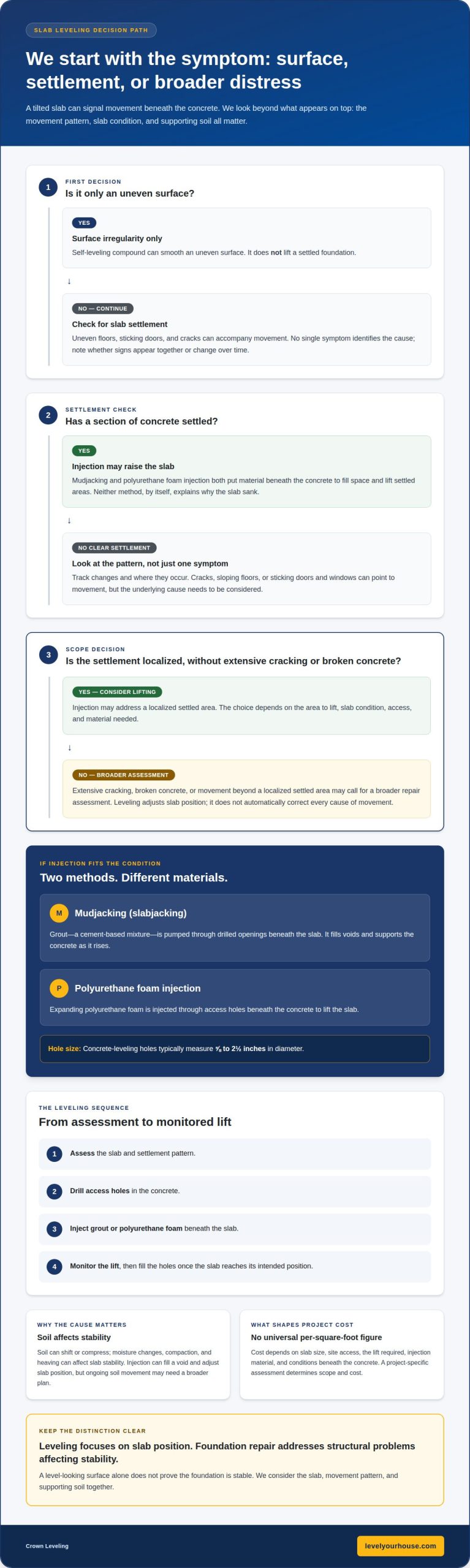
Foundation leveling and foundation repair are related, but they describe different scopes of work. Leveling focuses on lifting or adjusting a settled slab. Foundation repair addresses structural problems affecting stability. For example, injection beneath the concrete may lift a sunken section, while continued soil movement may call for a broader repair plan. The slab’s condition, movement pattern, and supporting soil help determine the appropriate scope. A smooth surface alone doesn’t prove the foundation is stable.
Other concrete and foundation methods address different problems. Self-leveling compound smooths an uneven surface but doesn’t lift a settled foundation. Shimming adjusts a structure by placing material beneath it, a method commonly used with pier and beam foundations. These approaches aren’t interchangeable. First distinguish between a surface irregularity, a sunken slab, and structural movement that needs repair.
How much does concrete slab foundation leveling cost per square foot in the United States? There’s no reliable per-square-foot figure that applies to every slab. Cost depends on the slab’s size, site access, the lift required, injection material, and conditions beneath the concrete. A project-specific assessment is needed to determine the scope and cost.
Leveling work is almost always a job for experienced professionals. The process involves drilling access holes, injecting lifting material beneath the slab, and controlling the lift to avoid uneven pressure. A homeowner may be able to improve a minor surface irregularity with a self-leveling compound, but that doesn’t replace structural evaluation when the slab has settled. Concrete leveling is typically completed in a single day, though the project scope and site conditions affect the work involved.
How can homeowners find licensed foundation leveling contractors and check local requirements? Contact the city or county building department and the relevant state licensing agency to learn which local requirements apply. Verify a contractor’s credentials with the appropriate agency, then compare written scopes, references, and warranty terms. Ask what the proposed work will address: lifting the slab, repairing structural damage, or both. Those distinctions help homeowners compare bids based on the actual repair rather than the label alone.
Mudjacking and polyjacking
Mudjacking, also called slabjacking, lifts sunken concrete by injecting material beneath it. Traditional mudjacking uses grout, a cement-based mixture that fills voids and supports the slab as it rises. Polyurethane foam injection uses expanding foam instead. Both methods aim to address settlement by filling space beneath the concrete, but the materials and how they behave during injection differ.
For mudjacking, a crew pumps grout through drilled openings beneath the slab. The grout spreads into empty spaces and gradually raises the concrete. Mudjacking is most often used for concrete slab foundations. Polyjacking injects polyurethane foam through access holes; the foam expands beneath the slab and lifts it. Hole size depends on the method: concrete-leveling holes typically measure ⅝ to 2½ inches in diameter.
The method alone doesn’t explain why a slab sank. For example, soil may have compacted beneath one corner, tilting the slab and contributing to nearby cracks. Injection can fill a void and adjust the slab’s position, but the cause of the void still matters. The repair plan depends on the area to be lifted, the slab’s condition, access, and the material required.
What steps are involved in leveling a concrete slab foundation? First, the slab and settlement pattern are assessed. Access holes are then drilled, and grout or polyurethane foam is injected beneath the concrete. The lift is monitored, and the holes are filled once the slab reaches its intended position.
- Mudjacking: Grout is pumped beneath the slab to fill voids and raise settled concrete.
- Polyjacking: Expanding polyurethane foam is injected beneath the slab to lift it.
These methods don’t address every kind of foundation distress. A slab with extensive cracking, broken concrete, or movement beyond a localized settled area may need a broader repair assessment. Injection adds support beneath the slab; it doesn’t rebuild damaged concrete or automatically stop ongoing soil movement. Matching the method to the observed condition helps prevent treating only the visible symptom.
After injection, the surface should be checked for remaining uneven areas and changes in nearby cracks or openings. A repaired slab’s position can be compared with the original condition to document the lift. If you’re weighing injection against a larger structural repair, explore concrete leveling methods as part of understanding which scope addresses the problem.
Signs of slab foundation problems
Foundation movement can show up in several parts of a home, not just in the slab. A wall crack, sloping floor, or suddenly sticking door can point to shifting support below. No single symptom identifies the cause. Look for changes appearing together, such as a widening wall crack and a sticking window.
Cracks deserve attention based on their direction, location, and change over time. Horizontal foundation cracks are often more concerning than vertical ones. A foundation crack wider than 1/8 inch can signal possible movement. A crack’s width doesn’t diagnose the problem by itself, but it gives you a useful detail to record and share during an assessment.
- Wall cracks: Note the direction and whether a crack widens toward the top.
- Gaps: Look for separation where walls meet ceilings or floors.
- Doors and windows: Watch for sticking, new gaps, or openings that appear warped.
- Floor changes: Notice sloping or uneven areas, especially alongside other symptoms.
- Cracks near openings: Record cracks around windows and doors, where movement can distort the frame.
Gaps between a wall and ceiling, or between a wall and floor, may indicate uneven settlement. A new separation at the top of a bedroom wall is more concerning if nearby doors also begin to stick. Check more than one room. A pattern across adjoining areas can help distinguish broader movement from an isolated finish crack.
Doors and windows offer practical clues. Foundation movement may distort wall openings, causing a door to bind against its frame or leaving a gap around a window. Note which opening has changed and whether it sticks at the top, side, or bottom. One misaligned door doesn’t prove foundation movement, but several affected openings alongside cracks warrant closer attention.
Keep a simple record rather than relying on memory. Photograph each crack with a ruler beside it, note its location, and record the date. Recheck the same spot later for changes in width or length. Include nearby symptoms, such as a sloping floor or a new wall-to-ceiling gap. These observations help you describe the problem clearly during a foundation assessment.
Arrange an assessment promptly when several signs appear together or a crack visibly changes. A qualified professional can consider the whole pattern, including slab condition, wall separations, and distorted openings. Document a developing crack before covering it. Cosmetic repairs can hide changes without addressing movement beneath the home. A clear record helps focus the assessment on the symptoms you’ve observed.
Soil movement and foundation stability
A slab relies on the soil beneath it for steady, even support. When soil compacts under a building’s weight, parts of the foundation can settle. When soil heaves, it pushes upward and may leave the slab uneven. In Central Texas, expansive clay soils can change with moisture, so soil movement is important to consider when assessing a foundation.
Moisture changes can affect soil in different ways. Drying may cause some soils to shrink and lose support; added moisture can make expansive clay swell. If one area changes more than another, the slab may rise or settle unevenly. For example, soil beneath a wet corner may behave differently from soil beneath a drier section, creating uneven support under the same foundation.
Water management helps limit avoidable moisture differences around a home. Downspouts should extend at least 5-10 feet from the foundation, so roof runoff drains farther away. Plumbing leaks also need prompt attention because leaking water can saturate soil beneath a slab. A persistent wet patch near a bathroom or kitchen may point to a plumbing issue rather than ordinary surface drainage.
Movement may also affect walls and openings. Uneven settlement can create wall cracks that are wider at the top than at the bottom. Soil pressure against a foundation can make basement or crawl-space walls bow or lean. A sticking door or window may reflect a distorted opening. These patterns help show how soil forces can affect more than the slab itself.
Leveling and stabilization address different parts of the problem. Lifting a settled slab changes its position, but it doesn’t stabilize soil that remains vulnerable to moisture changes. Leveling may be temporary if soil moisture continues to fluctuate. A repair plan should consider the cause of movement, the soil’s condition, and whether support beneath the foundation needs strengthening.
- Underpinning: Concrete or steel piers can extend or strengthen support beneath a foundation.
- Helical piers: Steel shafts are drilled into the ground until they reach stable soil, then attached to the foundation.
- Pressure grouting: A mixture of cement, sand, and additives is injected into soil to fill gaps, stabilize it, and increase load-bearing ability.
These approaches address different conditions. A pier system adds support at selected locations, while pressure grouting treats soil beneath the foundation. Neither replaces moisture management. Keeping drainage away from the home and addressing plumbing leaks promptly can reduce persistent water exposure that may undermine a repair strategy.
Benefits and drawbacks
Leveling can restore support beneath a settled slab without removing and replacing the entire foundation. Concrete leveling typically costs 50-70% less than replacing the slab. That difference can make it a practical option when the concrete remains suitable for lifting and the settlement is localized. For example, raising one sunken section may address an uneven floor without rebuilding every part of the foundation.
Avoiding full replacement can reduce demolition and disruption around the affected area. Injection methods use drilled access holes to deliver material beneath the slab, rather than requiring removal of the entire concrete surface. Careful assessment still matters: a severely damaged slab may not be suitable for lifting, and improving its position doesn’t automatically stabilize soil that continues moving.
Results depend on the slab, the supporting soil, and conditions after the work. Concrete leveling can last 20 to 50+ years with proper maintenance. That lifespan is not a substitute for addressing causes such as soil moisture changes or plumbing leaks. If water continues saturating or drying the ground unevenly, movement may recur even after the slab has been raised.
There are risks to consider. Lifting a concrete slab-on-grade foundation may create additional cracks or damage plumbing, windows, doors, or roofing. For example, movement during lifting can affect a pipe beneath the slab or change how a nearby door fits its frame. The condition of connected systems and finishes matters before work begins. Repairs to resulting damage may be outside the leveling scope.
- Potential benefit: Lifting can correct a settled section while avoiding full slab replacement.
- Key limitation: Leveling changes the slab’s position but doesn’t necessarily correct active soil movement.
- Possible drawback: Lifting may cause cracks or affect plumbing, windows, doors, or roofing.
- Maintenance factor: Drainage and plumbing conditions can influence how stable the supporting soil remains.
Compare the proposed scope with the symptoms and slab condition. Ask what the lift is intended to correct, how the plan accounts for underlying soil, and which connected components could be affected. A plan focused only on a visible low spot may overlook broader foundation movement. Clear measurements and a documented scope also help separate the intended lift from other repair needs.
If a settled area is affecting your home, review slab leveling options and consider whether lifting addresses the cause as well as the uneven surface.
Crown Leveling: Slab Foundation Repair
Crown Leveling Inc. provides slab foundation repair for homes with settlement, cracking, or uneven support. We assess the foundation’s condition and movement pattern to identify an appropriate repair approach. Our slab repair work uses a press Pier system; polyurethane injection may also address voids beneath concrete where that method fits the problem.
Consider an assessment when cracks are changing, floors are sloping, or doors and windows begin sticking alongside other signs. If access to plumbing beneath the slab affects the repair, Under Slab Tunneling may be relevant. The right scope depends on the observed damage and what is happening beneath the concrete.
For help understanding your slab’s condition and repair options, contact Crown Leveling Inc.
Choose a repair plan with a clear purpose
The next step is to connect what you’ve observed with the work your home needs. A careful concrete slab foundation leveling plan should explain whether the goal is to adjust a settled section, address structural damage, or improve support beneath the foundation. That distinction clarifies the scope before work begins and gives you a practical basis for weighing repair options.
Crown Leveling Inc. provides Concrete Slab Foundation Repair and Polyurethane Foam Injection for relevant foundation concerns. We also provide Pier And Beam Foundation Repair for homes with that foundation type. The right service depends on the structure and the problem being addressed, not simply on the appearance of an uneven floor.
Bring your observations and questions into the next conversation. Contact Crown Leveling Inc. to discuss your foundation concerns and take a clear, informed step toward protecting your home.
Frequently Asked Questions
Choosing the Right Path: DIY or Pro?
DIY work is suited to minor surface smoothing, not lifting a settled structural slab. You can photograph changes, note affected rooms, and check whether doors or windows have shifted. Raising concrete requires controlling how material spreads beneath the slab and how the slab responds. A professional assessment is the better choice when symptoms appear in several areas or the concrete itself is sinking.
What Is Concrete Leveling?
Concrete leveling adjusts a sunken or uneven concrete surface by adding support beneath it. A professional identifies the low area, creates access points, and injects lifting material below the slab. The goal is to improve its position without replacing the entire concrete section. For a driveway, walkway, or home slab, the appropriate method depends on the concrete’s condition and the space beneath it.
Why Is an Uneven Foundation a Problem?
An uneven foundation can change how a home’s weight is carried, putting strain on connected parts of the structure. For example, a shifted opening may make a door difficult to close, while movement can contribute to cracks in finishes. In Austin or Killeen, consider a cluster of changes rather than treating one sticking door as proof of foundation damage.
What is concrete slab foundation leveling, and how does it work?
This process restores support beneath a settled section by injecting grout or polyurethane foam through drilled access points. The material fills space below the slab and helps raise it toward the intended position. Work begins by identifying where support is lacking; the choice of injection material and placement depends on the slab’s layout and settlement pattern.
What are the signs that a concrete slab foundation needs leveling?
Look for a combination of changes: a sloping floor, cracks that appear or grow, and doors or windows that no longer fit smoothly. A gap between a wall and its ceiling or floor can offer another clue. These signs may prompt homeowners to consider concrete slab foundation leveling. Record each symptom’s location and progression, since patterns across rooms provide useful context.
What causes a concrete slab foundation to sink or become uneven?
Soil beneath a slab may compact under the building’s weight, reducing support in one area. Soil can also heave upward and push part of a structure out of alignment. Poor construction and earthquakes are other possible causes. When deciding whether concrete slab foundation leveling is appropriate, understanding the source and pattern of movement helps distinguish a localized support issue from a broader foundation concern.
What methods are used to level a concrete slab foundation, such as mudjacking and polyurethane foam injection?
Mudjacking, also called slabjacking, pumps grout beneath concrete to fill voids and lift the slab. Polyurethane foam injection uses expanding foam beneath the concrete to raise it. Both methods use drilled access points, but the injected material differs. The slab’s condition, the area needing support, and access beneath it all factor into selecting a method.
How do mudjacking and polyurethane foam injection compare in cost, durability, and disruption?
Neither method offers a universal cost advantage. An estimate depends on the slab area, access, material volume, and lift required. Durability depends partly on whether the soil conditions that caused settlement continue. Both approaches involve drilled access points and injection beneath the concrete; the site layout and affected area influence how disruptive the project will be.