
A diagonal crack at a door-frame corner may be a drywall stress mark, but it can also signal movement in the home. Diagonal cracks from the corner of a door frame may develop as materials shift or as the foundation settles or heaves with changes in soil moisture. A crack by itself does not prove there is a foundation problem.
It is understandable to worry when a crack appears beside a doorway, especially if it is growing or the door has started sticking. The pattern, width, and changes over time can help distinguish a minor drywall issue from signs that deserve closer attention.
Learn how drywall stress, seasonal moisture, expansive soil, and foundation movement can create these cracks. We also cover warning signs to watch for, including cracks that change or appear alongside sloping floors and doors that no longer open smoothly.
Key Takeaways
- Cracks near a doorway can stem from drywall stress, shifting materials, moisture changes, or foundation movement. The crack’s pattern is only one clue.
- Notice whether the crack is growing, changing shape, or appearing alongside sticking doors, racked frames, or uneven floors.
- Soil moisture can affect a foundation and contribute to heaving or settlement, which may show up as cracks around openings.
- Track changes over time and consider the pattern of other signs throughout the home when judging whether movement may be active.
- When several signs point to foundation movement, slab foundation repair may be relevant; the cause and extent of movement guide the next step.
Common causes of cracks above doors and windows
Cracks above openings can result from local stress, changing building materials, moisture, or movement elsewhere in the home. The location alone does not identify the cause. Compare the crack with the door’s operation, nearby surfaces, and any signs of water before drawing conclusions.
Everyday use can stress the drywall around a doorway. A hard-slamming door sends repeated force through its frame and the adjoining wall, sometimes loosening drywall joints or causing cracks. A frame that is not firmly secured can also shift as the door moves, transferring stress into the drywall. For example, a crack near a frequently slammed bedroom door may have a different cause from cracks above several openings.
Materials can change as they dry or respond to indoor conditions. Green lumber in a new home can have moisture content greater than 19% and may shrink as it dries. That movement can stress nearby drywall, including around doors and windows. Vertical cracks attributed to green lumber drying should be allowed to settle before repair; the stated advice is to wait at least a year.
Temperature and humidity changes can affect drywall and timber frames. A home left vacant for a few months may develop cracks above doors or windows as materials expand and contract. Timing and distribution matter: several cracks appearing after a period without climate control suggest a different pattern from one isolated crack beside a frequently used door.
- Door use and frame movement: Note whether the door slams, rubs, sticks, or appears racked. Hollow or lightweight doors can stick on the frame, and heavier doors can stick too, particularly with metal frames.
- Drying materials: In a newer home, check whether cracks are vertical and near drywall joints, which can help identify stress as lumber dries.
- Water intrusion: A fresh leak near a window or door can leave drywall damp to the touch. Yellow-brown staining around a crack is another clue to inspect the surrounding area.
- Wider movement: Look beyond the opening. Sloped, sagging, or heaving floors alongside a sticking door may point to a broader issue.
In one reported home, diagonal cracks appeared above three interior doors, making the number and distribution of affected openings useful details to record. Photograph each crack and note whether nearby doors operate smoothly. If only drywall tape has lifted along a single vertical seam, the tape itself may be the source; household glue behind it can press it back into place. Cracks accompanied by damp drywall, staining, multiple affected openings, or changes in door operation call for closer attention to the underlying cause.
Diagonal drywall cracks at door-frame corners
A diagonal crack from the corner of a door frame may reflect drywall stress or broader movement. Its width, direction, and changes over time help determine what needs attention.
Repairing Cracks Around Door Frames
Repair means fixing the drywall surface after identifying what caused the crack. That distinction matters because patching an active movement crack can hide its progression without addressing the underlying issue.
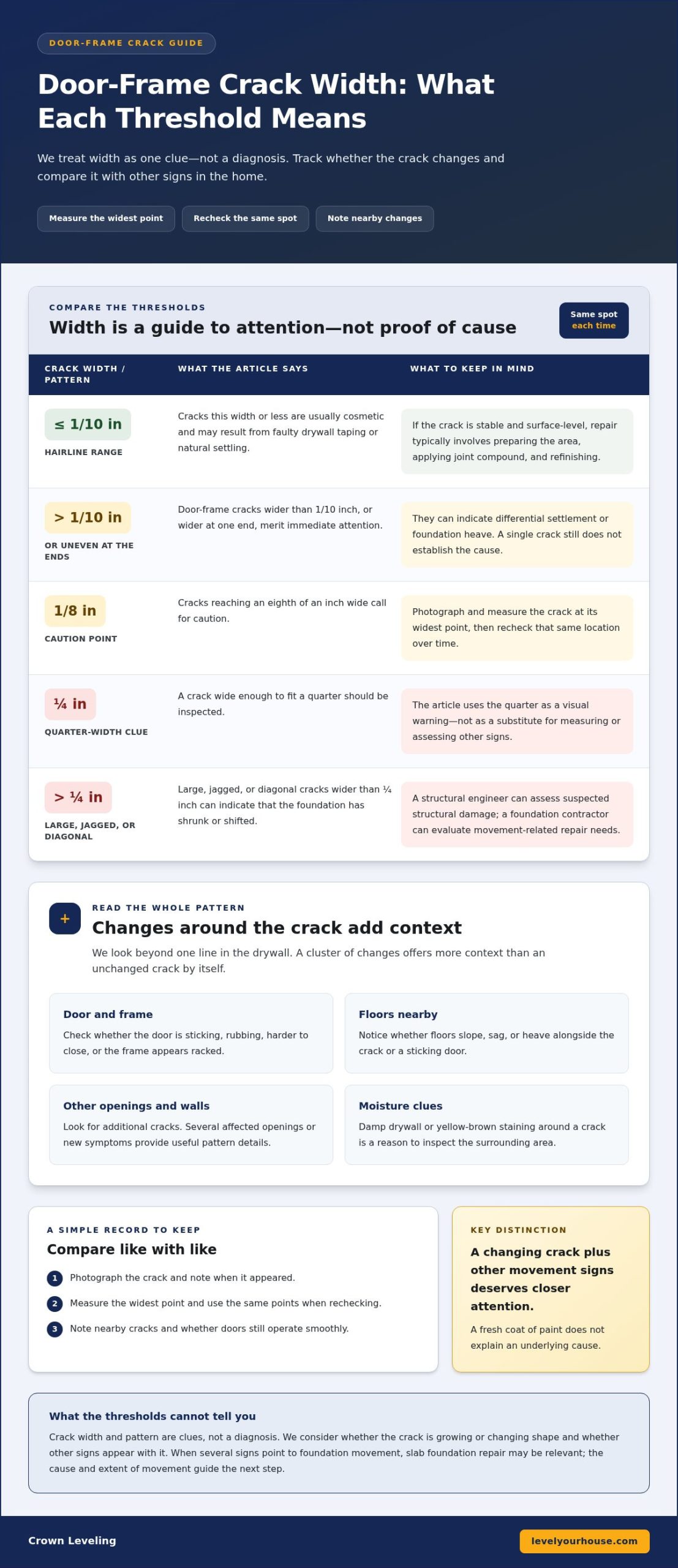
Hairline cracks measuring 1/10 inch wide or less are usually cosmetic and can result from faulty drywall taping or natural settling. For a stable, surface-level crack, repair typically involves preparing the damaged area, applying joint compound, and refinishing the surface. Match the repair to the material and crack pattern, not just the visible line.
Before patching, photograph the crack and note its width at the widest point. Recheck the same spot later. A widening crack or one that opens more at one end needs more than cosmetic attention. Cracks reaching an eighth of an inch wide call for caution, while a crack wide enough to fit a quarter should be inspected.
When to Seek Professional Assessment
A professional assessment is appropriate when a crack widens, changes shape, or appears with other signs of movement. An evaluation can help distinguish drywall damage from active structural movement.
Door-frame cracks wider than 1/10 inch, or wider at one end than the other, merit immediate attention because they can indicate differential settlement or foundation heave. Large, jagged, or diagonal cracks wider than ¼ of an inch can indicate that the foundation has shrunk or shifted. A structural engineer can assess suspected structural damage; a foundation contractor can evaluate movement-related repair needs.
A single crack does not establish its cause. Record when it appeared, measure the same points each time, and compare it with cracks at other openings. If the crack changes or several signs develop together, arrange an assessment rather than relying on a fresh coat of paint.
Warning Signs Alongside Cracks
Warning signs are changes elsewhere in the home that appear alongside a door-frame crack. A cluster of symptoms offers more context than one line in the drywall.
Check whether the door is racked, rubbing, or sticking, and whether nearby floors slope, sag, or heave. A crack that changes while a door becomes harder to close is more concerning than an unchanged hairline mark with normal door operation. Horizontal cracks at the joint can also signal movement and a larger issue.
Look across nearby openings and walls for additional cracks, then photograph each one with the date. If cracks grow or new symptoms appear, that pattern supports a closer structural review. For cracks accompanied by these movement signs, slab foundation repair can address foundation-related causes rather than masking the drywall damage.
Foundation heave from soil moisture
Expansive clay can swell when it absorbs water and shrink as it dries. That soil movement can push parts of a foundation upward, a process called heave. Near a door opening, uneven movement may transfer stress into the wall and produce a diagonal drywall crack. The crack shows where stress appeared, not exactly how the soil or foundation moved.
Moisture distribution matters. A leaking downspout may keep soil wetter beside one part of a house, while the ground elsewhere stays dry. If that area expands, the foundation may rise unevenly rather than moving as a level surface. Changes around the home, such as a new drainage path or persistent pooling, can help explain why cracks appear in one area. A crack near a doorway is more informative when considered alongside the surrounding ground and other parts of the house.
Look for water patterns before focusing only on the drywall. Check whether roof runoff falls close to the foundation, whether gutters overflow, and whether the yard slopes toward the home. Note where puddles remain after rain and whether cracks or door-operation changes cluster near that side. These observations help connect moisture conditions with visible movement, but they do not prove soil heave caused a particular crack.
- Clear gutters regularly. Leaves and debris can block runoff, causing water to spill beside the foundation.
- Extend downspouts. Directing roof water away from the house can reduce concentrated wet spots beside the foundation.
- Review yard grading. Ground that slopes toward the home can carry rainwater toward its perimeter; regrading to slope away helps redirect runoff.
- Manage crawl-space moisture. In homes with a crawl space, encapsulation is one approach to controlling moisture in that area.
Make the same observations after both wet and dry weather. For example, photograph a doorway crack and note whether nearby doors operate differently after prolonged rain or a dry spell. Record where water collects, which downspouts drain nearby, and whether the floor or adjacent walls change. A pattern tied to moisture conditions can help clarify the next assessment, while a single crack cannot identify the cause by itself.
Heave and settlement describe movement in different directions: heave pushes upward, while settlement involves downward movement. Uneven movement can affect different parts of the same home differently, so a crack’s direction alone cannot distinguish the two. In Austin, consider both moisture sources and the distribution of signs around the house. Addressing runoff can help manage soil moisture, but visible cracks that change alongside other movement signs deserve a broader foundation evaluation.
Home movement and foundation settlement
Settlement means a foundation moves downward, while heave pushes it upward. Uneven movement can twist a doorway, transferring stress into the drywall and creating a diagonal crack. A crack alone does not prove either condition. Its width, shape, changes over time, and relationship to other signs provide a clearer picture.
Cracks around door and window openings can accompany settlement, but context matters. One stable hairline mark beside a smoothly operating door is different from a widening crack alongside a sloping floor. A crack wider than 1/10 inch, or wider at one end, merits immediate attention because it can indicate differential settlement or foundation heave. Large, jagged, or diagonal cracks wider than ¼ inch may indicate that the foundation has shrunk or shifted.
Check how the doorway functions as well as how the crack looks. A door that sticks without a visible obstruction can indicate moderate or severe foundation changes. A racked frame, rubbing door, or new gap between the door and frame adds useful context. Horizontal cracks at the joint can also signal movement and may point to a larger issue. Do not judge any of these clues in isolation.
Look for a pattern across the home. For example, a growing doorway crack combined with a sloped floor and sticking doors suggests broader movement more strongly than a crack by itself. Diagonal masonry cracks can also indicate differential vertical foundation movement, according to the National Bureau of Standards. Earthquakes can cause movement that affects homes and may lead to door-frame cracks, so consider whether the timing followed a known event.
- Record the crack: Photograph it and note its widest point, its shape, and the date.
- Track changes: Compare later observations from the same position to see whether the crack widens or lengthens.
- Check nearby signs: Note sticking doors, racked frames, sloping or heaving floors, and cracks at other openings.
- Consider the pattern: Several changing signs deserve more attention than one unchanged crack.
Monitoring helps show whether a crack is changing, but it can’t determine the cause by itself. If the crack grows or appears with other signs, a specialized inspection by a structural contractor or engineer may be needed to assess whether movement is active. A reputable structural engineer can inspect when structural damage is suspected. The key distinction is not simply “cracked” or “uncracked,” but whether multiple observations point to ongoing foundation movement.
Can seasonal humidity or house settling cause cracks at door-frame corners?
Yes. Seasonal humidity can contribute to drywall cracks, although moisture inside a home is an uncommon cause. Drywall and framing can respond to changing indoor conditions, placing stress near a door opening. House settling can also create cracks as parts of a structure shift. Timing, location, and pattern help distinguish these possibilities from continuing foundation movement.
A crack that appears after a change in indoor humidity may reflect material movement rather than a foundation problem. Compare its timing with changes in ventilation, heating, or air conditioning. For example, cracks appearing during a prolonged period without climate control may have a different context from cracks that steadily widen throughout the year. Seasonal timing is a clue, not a diagnosis.
Age matters, but it doesn’t settle the question by itself. One inspector considered ongoing movement unlikely in a 40-year-old house with diagonal cracks, while noting that a specialist would be needed to assess whether a problem remained. That distinction is useful: an older home can have longstanding marks, yet a changing crack or new symptoms still deserves attention.
Use a consistent record to distinguish a stable mark from one that is changing:
- Photograph the crack. Keep the camera position and lighting similar each time.
- Record its shape and width. Note whether one end opens more or the line lengthens.
- Write down seasonal context. Include changes in indoor conditions, weather, or recent water intrusion.
- Check the doorway. Record whether the door begins rubbing, sticking, or closing differently.
- Compare nearby areas. Look for new cracks or floor changes beyond that single opening.
A stable hairline crack that remains unchanged through different seasons gives a different record from one that grows alongside a sticking door. If the crack changes, or other movement signs appear, seek a specialized assessment to determine whether the issue is active. Track the evidence rather than relying on age or season alone. For a changing crack with related movement signs, request a foundation assessment to help identify the cause.
Crown Leveling: Slab Foundation Repair
At Crown Leveling Inc., we specialize in slab foundation repair using a press Pier system. We serve Central Texas communities, including Austin, Killeen, Temple, and Round Rock.
When a crack appears alongside signs of foundation movement, our Concrete Slab Foundation Repair service addresses the foundation concern rather than cosmetic drywall damage. The appropriate next step depends on the home’s foundation and the movement observed.
If you’re seeing several signs of movement, contact Crown Leveling Inc. to discuss your foundation concerns.
Take the Next Step Toward a Clearer Assessment
A crack is a reason to pay attention, not to assume the worst. If diagonal cracks from the corner of a door frame are changing or appear with other movement signs, discuss the pattern with a foundation repair professional. That conversation can help clarify whether the concern relates to the foundation or another source of stress.
Crown Leveling Inc. provides Concrete Slab Foundation Repair, Polyurethane Foam Injection, and Pier And Beam Foundation Repair. The appropriate service depends on the foundation type and the issue being addressed. We can help assess foundation-related concerns behind the damage and identify a useful next step for your home.
Contact Crown Leveling Inc. about your foundation to talk through what you’re seeing. A thoughtful assessment can help you move forward with greater clarity and confidence.
Frequently Asked Questions
What Causes Door Frame Cracks?
Door-frame cracks develop when stress reaches the drywall around an opening. A door that repeatedly slams, a shifting frame, drying building materials, moisture, or foundation movement can each contribute. The location offers clues: damage limited to one busy doorway suggests a different pattern from cracks appearing across several rooms. Note which doors are affected and whether nearby walls or floors show changes.
Do Small Cracks Above My Doors Indicate Foundation Problems?
Not necessarily. A small, unchanged crack above one doorway can come from drywall tape or minor material movement rather than a foundation issue. Compare it with other openings and note whether the door’s fit has changed. A crack that grows or appears with new floor or door problems deserves more attention than an isolated mark that remains the same.
What Can Cause the Movement of Your Home?
Home movement can result from soil expanding or shrinking as its moisture changes, uneven foundation settlement, or heave. An earthquake can also move a structure. For example, a home may show different symptoms if one part of its foundation shifts while another remains stable. The pattern across doorways, floors, and walls helps distinguish localized drywall stress from movement affecting a broader area.
Will My Building Insurance Cover Cracks Above Doors And Windows?
Your policy wording and the documented cause determine whether coverage applies; a crack alone does not establish that it is covered. Review your policy’s coverage terms and exclusions, and keep dated photographs of the damage. If a specific event preceded the crack, record that information too. Contact your insurer with the details and ask how the policy applies to the reported damage before arranging cosmetic repairs.
What causes diagonal cracks from the corners of door frames?
Diagonal cracks from door-frame corners form when stress concentrates at the opening and transfers into the surrounding drywall. Possible sources include a moving frame, drywall joint stress, or movement elsewhere in the structure. Compare whether the same pattern appears at another doorway. If the crack changes alongside altered door operation or floor movement, consider the broader pattern rather than treating the corner alone.
Are diagonal cracks above door frames a sign of foundation settlement or structural damage?
They can be, but a diagonal crack alone does not establish settlement or structural damage. A changing crack accompanied by a sticking door, uneven floor, or additional cracks makes foundation movement more plausible. For example, a crack that remains stable while the doorway works normally provides different evidence from one that widens as other areas change. Consider the signs and their progression together.
How can I tell whether a door-frame crack is cosmetic or serious?
Check whether the crack remains stable and whether other parts of the doorway or room are changing. A surface mark limited to drywall, with a door that still fits and operates normally, may be cosmetic. A crack that lengthens, widens, or appears with a newly difficult-to-close door needs closer attention. Keep dated photos from the same angle to make changes easier to compare.
What crack width or pattern indicates a structural problem?
Width is a warning clue, not a diagnosis. Hairline cracks measuring 1/10 inch wide or less are usually cosmetic, while cracks wider than 1/10 inch or wider at one end warrant immediate attention. Be cautious at an eighth of an inch; large, jagged, or diagonal cracks wider than ¼ inch may indicate foundation shrinkage or shifting. Check for related movement signs too.