
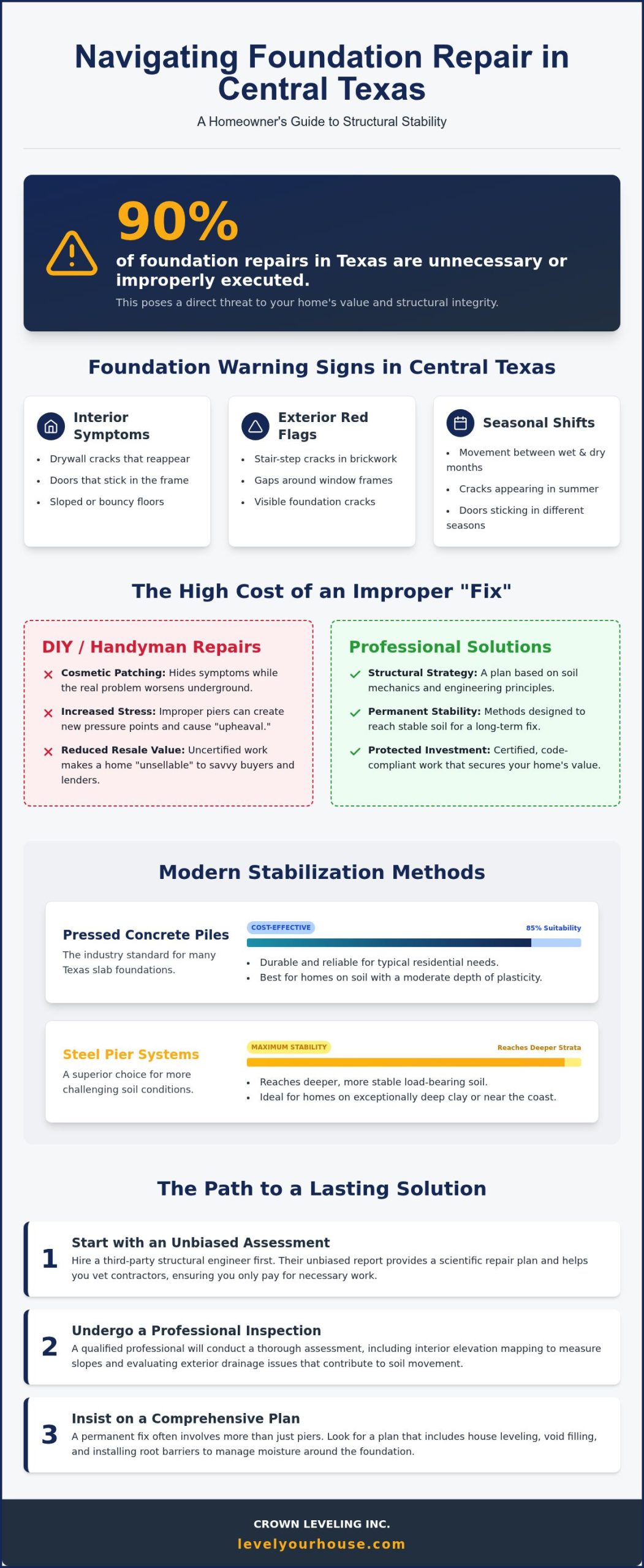
Did you know that nearly 90% of foundation repairs initiated by contractors in Texas are either unnecessary or improperly executed? For a homeowner in Austin or San Antonio, that statistic is more than just a data point; it’s a direct threat to your bank account and your home’s structural integrity. It’s completely normal to feel stressed when you see new cracks appearing as the Central Texas sun bakes the expansive clay soil. You want a permanent fix, but the fear of overpaying for a solution that won’t last through next summer often leads to “analysis paralysis.”
This guide will help you find a foundation repair professional who acts as a soil strategist rather than just a pier installer. You’ll learn how to distinguish between a structural engineer’s unbiased assessment and a contractor’s sales pitch, ensuring you get a transparent repair plan that actually works. We’ll walk through the essential vetting steps, local 2026 registration requirements, and the modern stabilization methods needed to protect your Texas home for the long haul.
Key Takeaways
- Understand why Texas’s unique expansive clay soil requires a specialist rather than a general contractor for structural stabilization.
- Identify the differences between pressed concrete piles and steel pier systems to determine which method offers the best long-term stability for your slab.
- Learn how to use a structural engineer’s unbiased report to vet a foundation repair professional and ensure you only pay for necessary repairs.
- Discover what to expect during a professional assessment, including interior elevation mapping and evaluations of exterior drainage issues.
- Recognize why a comprehensive repair plan involving house leveling and root barriers is essential for a permanent solution in Central Texas.
Why Your Texas Home Needs a Specialist Foundation Repair Professional
Texas homes face a unique geological challenge known as the “Texas Squeeze.” In the Blackland Prairie region, which stretches through Austin, San Antonio, and Killeen, the soil is packed with high-plasticity clay. This soil acts like a giant sponge; it expands aggressively when wet and shrinks drastically during the brutal summer droughts. This constant movement puts immense pressure on your home’s slab. A general contractor might understand how to frame a wall or lay tile, and while you may explore General Contracting and Construction Services for those projects, they rarely have the specialized training to manage soil mechanics or load-bearing strata. Hiring a dedicated foundation repair professional is essential because they focus on the science of stabilization rather than just cosmetic fixes.
The cost of waiting to address these issues is high. As Texas droughts accelerate, the soil pulls away from your foundation, creating voids that lead to sudden, expensive structural failures. A true foundation repair professional understands foundation engineering principles and uses that knowledge to design a system that reaches stable soil. They don’t just provide manual labor; they provide a structural strategy tailored to the specific geography of Central and South Texas.
Identifying Foundation Warning Signs in Central Texas
Your home often signals for help long before a total failure occurs. You should watch for these specific red flags that indicate the “Texas heave” is affecting your property:
- Interior Symptoms: Drywall cracks that reappear after patching, doors that stick in the frame during summer, and floors that feel slightly sloped or bouncy.
- Exterior Red Flags: Stair-step cracks in the exterior brickwork and visible gaps between window frames and the siding.
- Seasonal Shifts: Noticeable movement in your home’s alignment between the wet months of January and the scorching heat of July.
The Dangers of DIY or Unqualified ‘Handyman’ Repairs
It’s tempting to hire a local handyman to “patch” a crack, but this is a cosmetic distraction from a structural crisis. Patching hides the symptoms while the underlying cause continues to worsen. Improperly placed piers or poorly mixed concrete can actually increase the stress on your slab, leading to “upheaval” in other areas of the house. Beyond the physical risk, uncertified foundation work can ruin your home’s resale value. Most Texas lenders and savvy buyers require a certified structural report before closing. If your repairs weren’t handled by a legitimate foundation repair professional, you might find your home “unsellable” until the work is redone correctly. Professional intervention ensures the job is done to code, protecting both your safety and your financial investment; for homeowners concerned about related environmental issues, you can learn more about Foundation ResQ and their expertise in moisture-related remediation.
Modern Methods Used by Top Foundation Repair Professionals
Top-tier foundation repair professionals in 2026 no longer rely on a one-size-fits-all approach. As Texas weather cycles become more volatile, the industry has shifted toward precision engineering and diverse stabilization techniques. Pressed concrete piles remain the standard for many Texas slab foundations because they’re durable and cost-effective for typical residential needs. However, for homes built on exceptionally deep clay or those located near the Gulf Coast, steel pier systems are often the superior choice. These piers reach deeper load-bearing strata, providing a permanent level of stability that concrete piles sometimes can’t match in high-plasticity soils.
For historic Texas homes, pier and beam restoration is a specialized craft. Unlike modern slabs, these homes require a delicate balance of wood rot replacement and shim adjustments to address sagging floors without damaging the original structure. Whether your home is a mid-century ranch or a historic Victorian, a qualified foundation repair professional will assess the specific structural needs before recommending a method. As you vet contractors, it’s wise to consult the Office of the Attorney General to avoid home improvement scams and ensure your chosen professional follows state-recommended business practices.
Deep Piering vs. Surface Leveling
Choosing between steel and concrete often depends on the depth of the stable soil. During installation, a professional determines the “refusal point.” This is the depth where the pier can no longer be driven because it has hit bedrock or highly compacted soil. While steel is a larger upfront investment, its ability to bypass shifting clay makes it invaluable for long-term structural protection. For secondary structures like patios, pool decks, and driveways, polyurethane foam foundation repair has become the preferred non-invasive method. It levels concrete surfaces quickly without the need for heavy machinery or messy excavation.
Specialized Solutions for Under-Slab Issues
Lifting a house is only half the battle. When a foundation shifts, the plumbing pipes buried beneath the slab often crack or separate. This is where foundation tunneling for plumbing becomes a critical part of the repair process. Tunneling allows master plumbers to access and repair leaks without jackhammering through your interior flooring. Modern professionals also use soil stabilization injections to manage soil heave caused by these leaks, creating a moisture-controlled environment under the home. If you’re noticing uneven floors or sticking doors, the team at Crown Leveling Inc. can provide a comprehensive evaluation to see which of these modern solutions fits your home’s needs.
Structural Engineer vs. Foundation Repair Contractor: Knowing the Difference
The biggest mistake a Texas homeowner can make is assuming that an engineer and a contractor perform the same job. While both are essential to a successful project, their roles are distinct. A structural engineer is a licensed professional who provides an unbiased, third-party assessment of your home’s integrity. They don’t sell piers or foam; they sell data and design. In 2026, a typical engineering report in Texas costs between $300 and $800. This fee covers a comprehensive plan that tells you exactly what is wrong and what is needed to fix it. Without this plan, you’re essentially letting a salesperson diagnose their own solution.
A foundation repair professional is the specialist who takes that engineering plan and brings it to life. Their role involves the heavy lifting: excavating, installing pier systems, and performing the actual house leveling. The best professionals in the industry actually prefer working with independent engineers. It provides a clear roadmap for the crew and ensures the homeowner that the proposed work is necessary and scientifically sound. Paying for an independent inspection might seem like an extra expense, but it often saves thousands of dollars by preventing “over-repairing,” where contractors suggest more piers than the structure actually requires.
When to Hire an Independent Structural Engineer
There are specific scenarios where an engineer’s report is non-negotiable. If you are buying or selling a home in fast-moving markets like Austin or San Antonio, a certified structural report is often required by lenders or savvy buyers to clear the title. You should also call an engineer if you find yourself in a dispute with a repair company over the quality of their work. For complex homes with multiple additions or those built on steep Hill Country slopes, an engineer’s expertise is the only way to ensure the repair plan accounts for varying weight loads and soil depths.
Vetting a Foundation Repair Contractor in 2026
Texas does not require a state-level license for foundation repair, which makes your vetting process even more critical. Instead, contractors must register with individual municipalities. For example, a contractor in Dallas must pay a $120 annual registration fee to pull permits. Always ask a potential foundation repair professional for proof of their municipal registration and general liability insurance. When reviewing a “Lifetime Transferable Warranty,” dig into the details. Ask these specific questions:
- Is the warranty backed by a national trust or only by your company’s current existence?
- Does the warranty cover future adjustments if the soil shifts again next summer?
- Do you have recent references from projects in Killeen, Temple, or Corpus Christi?
A reputable contractor will be transparent about their history and happy to provide local references that prove their expertise in handling the specific clay conditions of your neighborhood.
The Professional Inspection: What to Expect During an Assessment
When a foundation repair professional arrives at your home, they shouldn’t start by handing you a contract. A high-quality inspection is a data-gathering mission. Most pros use a Zip Level or an electronic altimeter to map out the interior elevation of your house. This tool measures the height of your floors relative to a central reference point, usually the center of the home. By taking readings every few feet, the technician creates a topographical map of your slab. This data reveals exactly where the house has settled and by how much, which is far more accurate than just looking at drywall cracks.
The inspection also includes a Manometer reading. This provides precise leveling data that identifies the specific high and low points of the structure. Once the interior is mapped, the pro moves outside to finalize the repair plan. This plan should clearly mark the proposed pier locations and provide estimates for how deep those piers must go to reach stable soil. You shouldn’t accept a vague verbal agreement. Ensure the plan is documented on a scaled drawing of your home’s footprint so you know exactly where the stabilization will occur.
Analyzing the Soil and Drainage Environment
A specialist often looks at your gutters and downspouts before they ever touch the foundation. Improper drainage is a leading cause of soil movement in Texas. If water pools against your slab, it creates “negative grade” issues that soften the clay soil and lead to settlement. Large trees are another factor. Their thirsty roots can suck moisture from beneath your home, causing the soil to shrink and the slab to drop. In many cases, root barrier installation is necessary to stop this cycle of dehydration and protect your structural integrity over the long term.
Understanding Your Foundation Repair Quote
Comparing quotes from different slab foundation repair companies involves more than just looking at the bottom line. A transparent quote breaks down the specific pier count, the estimated depth for those piers, and the labor required. Be wary of hidden costs that often emerge after the project begins. For example, many Texas municipalities require a post-repair plumbing test to ensure no pipes broke during the lift. Ask if the quote includes these tests, permit fees, or landscaping restoration. If you want a clear, comprehensive assessment without the guesswork, schedule a professional inspection with Crown Leveling Inc. to secure your home’s future.
Why Crown Leveling Inc. is the Preferred Foundation Professional in Central Texas
Crown Leveling Inc. stands out as a premier foundation repair professional because we don’t just fix cracks; we solve the underlying geological issues. From the rocky limestone of the Hill Country to the shifting clays of the Blackland Prairie, we’ve spent decades mastering the unique terrain along the I-35 corridor. Our approach is holistic. We combine traditional piering with modern solutions like polyurethane foam stabilization to ensure your home stays level regardless of the season. Our team handles the entire process, including complex house leveling and under-slab plumbing tunneling, so you don’t have to manage multiple contractors. We also prioritize homeowner education, teaching you how to manage soil moisture through proper watering and drainage maintenance to prevent future movement.
Our Service Areas: From the Hill Country to the Coast
Geology changes quickly in Texas. In Georgetown and Round Rock, homeowners often deal with shallow bedrock and rocky soil that requires specialized piering equipment. Conversely, our work in Corpus Christi involves managing high humidity and coastal soil challenges that can lead to rapid slab erosion. We also serve the rapidly growing communities in Kyle, Buda, and Cibolo, where new construction often meets expansive clay for the first time. As a local foundation repair professional, we understand that a solution for a house in San Antonio might not be the right fit for one in Killeen. We customize every plan to the specific zip code and soil profile of your property, ensuring the methods we use are compatible with your local environment.
Start Your Foundation Restoration Today
Taking the first step toward a stable home is simple. When you schedule a professional foundation evaluation with our team, we perform a deep dive into your home’s structural health. During your first consultation, we’ll walk you through the manometer readings, explain any drainage issues we find, and provide a clear, itemized repair plan. We believe in education over high-pressure sales. Our goal is to leave you with a permanent solution and the knowledge needed to maintain your foundation for decades to come. Whether you’re dealing with a sagging pier and beam floor or a cracked concrete slab, our experts are ready to help. If you’re ready to stop the shifting and gain peace of mind, contact Crown Leveling Inc. for a professional foundation assessment today.
Secure Your Home’s Future on Solid Ground
Choosing the right foundation repair professional is the most significant decision you’ll make to protect your property’s value. You now know that a successful repair requires more than just driving piers into the ground. It demands a strategy that accounts for the specific high-plasticity clay found across Austin and San Antonio. By prioritizing independent engineering reports and insisting on a thorough digital elevation survey, you’ve already avoided the most common pitfalls that lead to failed repairs and wasted money.
Level Your House has served Austin, San Antonio, and Killeen for over 20 years. We specialize in the complex soil of the Texas Blackland Prairie, offering comprehensive slab and pier-and-beam solutions that stand up to extreme weather cycles. Don’t let another season of drought and rain compromise your home’s structure. Take control of your home’s stability today. Get Your Professional Foundation Evaluation from Level Your House and gain the peace of mind that comes with a permanent, expert solution. Your house deserves to stand on solid ground.
Frequently Asked Questions
How do I find a reputable foundation repair professional in Texas?
You should start by verifying a contractor’s municipal registration and local references. Since Texas doesn’t have state-level licensing for this trade, reputable companies must register with individual cities like Austin or San Antonio to pull necessary permits. Always ask for a physical office address in your region and proof of general liability insurance to ensure you’re working with a legitimate local expert.
What is the difference between a foundation repair contractor and a structural engineer?
A structural engineer is a licensed diagnostic expert who creates a repair blueprint without any incentive to sell you specific products. A foundation repair professional is the specialist who executes that plan using specialized equipment and labor. While the contractor provides the warranty and handles the physical lifting, the engineer provides the unbiased data that ensures the repair is scientifically sound.
Is a ‘free estimate’ enough, or do I need a paid engineering report?
A free estimate is essentially a sales proposal that outlines what a contractor thinks you need. A paid engineering report is a comprehensive structural analysis that protects you from unnecessary work. For minor issues, an estimate might suffice, but you should invest in a professional engineering report for real estate transactions or complex structural failures to ensure an unbiased scope of work.
How long does a professional foundation repair typically take?
Most residential foundation projects in Central Texas are completed within two to five days. The timeline depends on the number of piers required and whether your home needs additional services like plumbing tunneling or root barrier installation. Your foundation repair professional will provide a specific schedule after the initial assessment, accounting for the complexity of your home’s footprint and soil conditions.
Will foundation repair damage my landscaping or interior flooring?
Exterior piering requires digging holes approximately three feet deep around your home’s perimeter, which will temporarily impact plants and shrubs near the slab. If repairs are needed under the center of the house, professionals often use tunneling to avoid cutting through your interior flooring. This modern approach keeps the mess outside and preserves your hardwood, tile, or carpet during the lifting process.
How can I tell if a foundation repair company is actually local to my city?
Look for a company that can discuss the specific soil profiles of your neighborhood, such as the rocky terrain in Georgetown or the heavy clay in Killeen. Out-of-state companies often use generic methods that don’t account for the “Texas Squeeze.” A truly local professional will have a physical office in the area and a long history of navigating the unique climate cycles of the I-35 corridor.
What should be included in a professional foundation repair warranty?
A high-quality warranty should be a lifetime transferable guarantee that covers future adjustments if the soil shifts again. It’s important to check if the warranty is backed by a trust or if it relies solely on the company staying in business. Ensure the document clearly defines what triggers a warranty claim, such as a specific measurement of settlement or upheaval.
Can I stay in my house while the foundation repair professional is working?
You can typically remain in your home throughout the entire repair process. Most of the heavy work happens outside the house, so your daily routine won’t be significantly disrupted. You’ll hear some noise and feel minor vibrations during the pier-driving and lifting phases, but the structure remains safe and habitable while the crew is on-site.